Phytase Animal Feed: Process Guide for Industrial Buyers
Practical B2B guide to phytase animal feed use, dosing, pelleting stability, QC, COA/TDS/SDS review, pilot validation, and supplier selection.
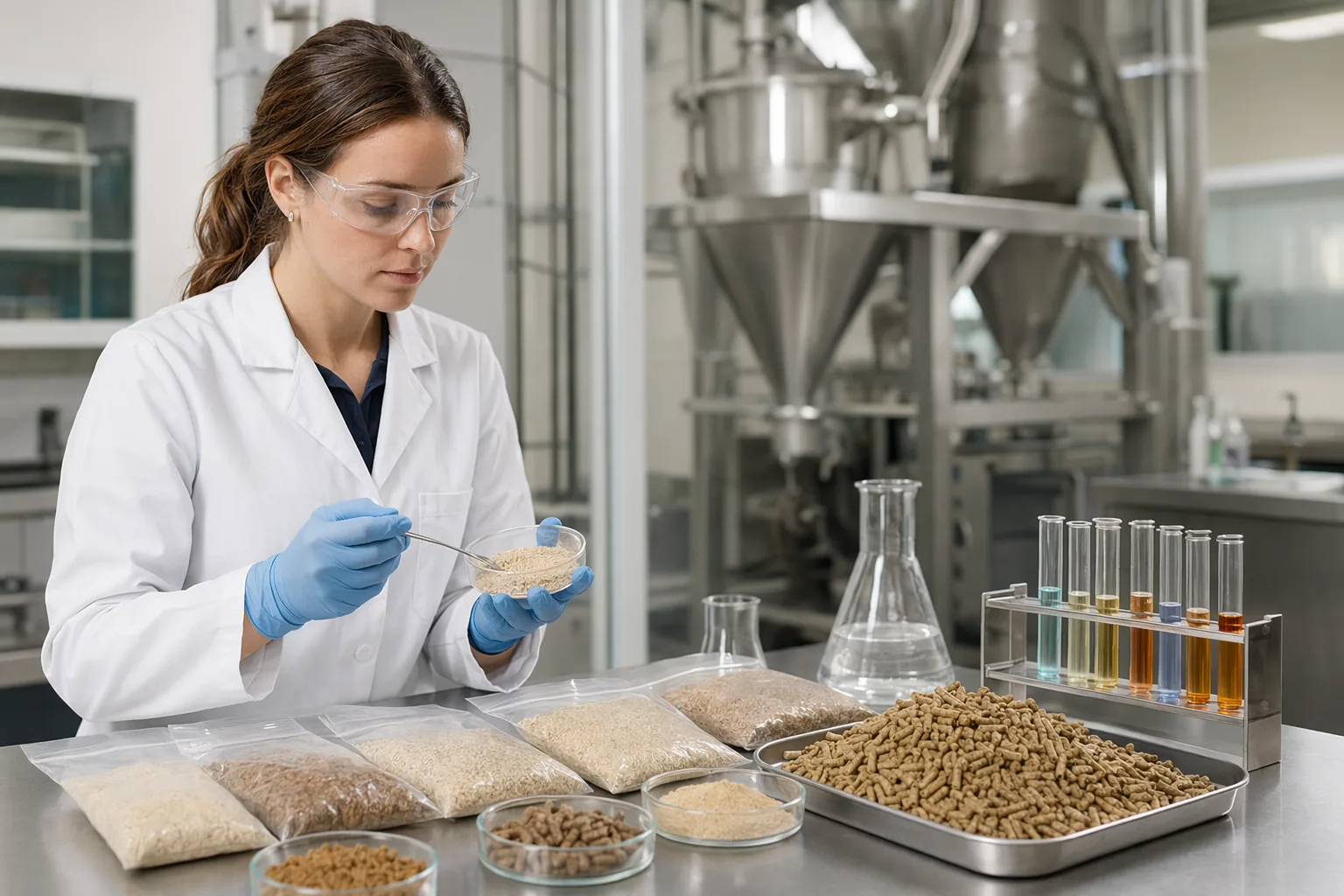
A practical guide for feed mills, premix manufacturers, integrators, and formulators evaluating phytase enzyme for animal feed applications.
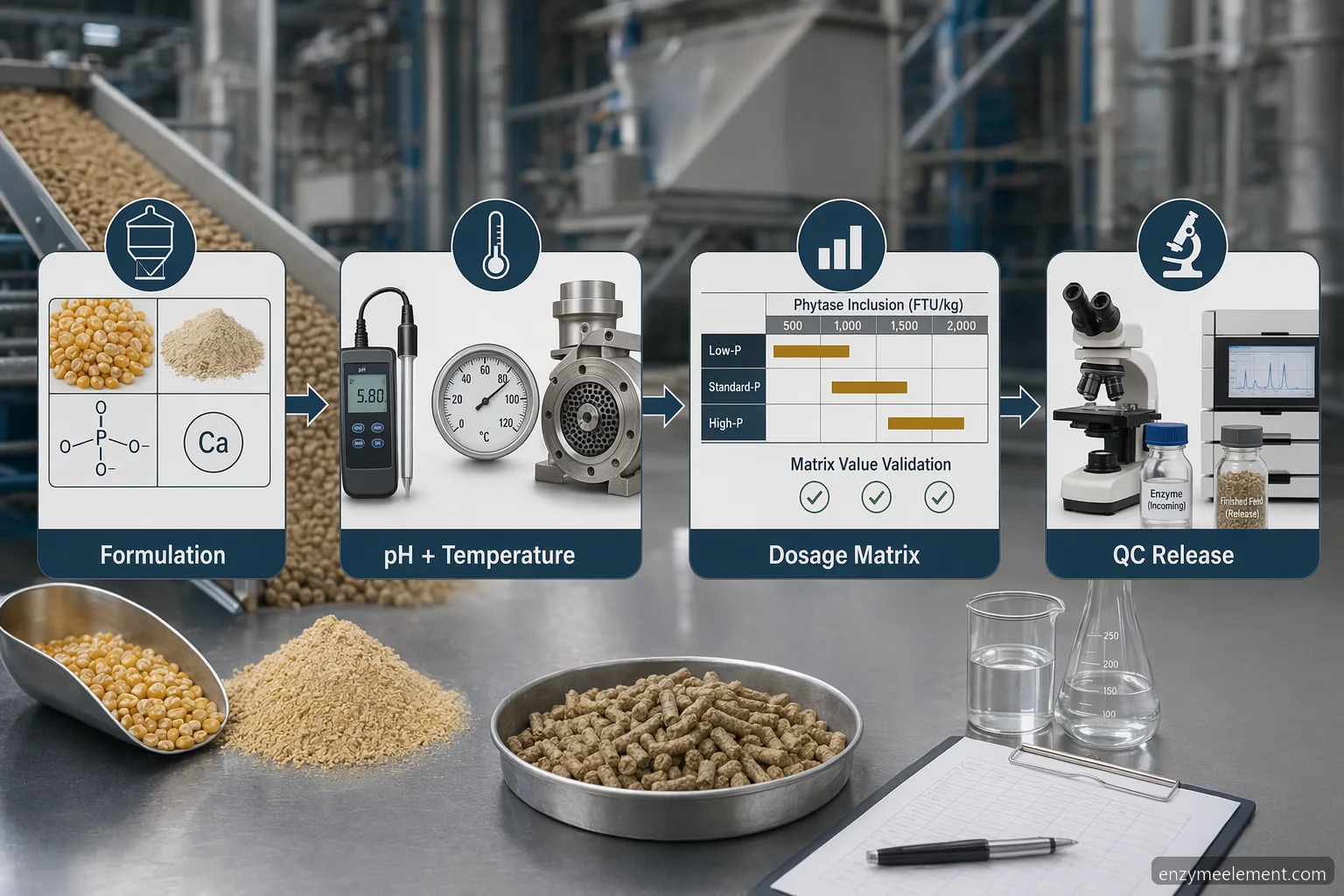
Where Phytase Fits in Animal Feed Formulation
Phytase animal feed applications focus on releasing phosphorus from phytate, a naturally occurring storage form of phosphorus in grains, oilseed meals, and plant-based ingredients. In monogastric diets such as poultry and swine, phytate phosphorus is not fully available without enzymatic hydrolysis, so a phosphorus release enzyme can help formulators adjust mineral inputs and nutrient matrices. In aquaculture, phytase may also be considered where plant protein inclusion is significant and processing conditions allow enzyme survival or post-processing application. The commercial decision is not simply whether to add phytase, but which phytase enzyme for animal feed matches the diet, process, species, regulatory context, and target economics. Buyers should evaluate declared activity, activity units, substrate method, pH activity curve, thermostability, carrier system, and compatibility with premix handling. Phytase in food and human nutrition is a separate application area; this guide addresses industrial feed manufacturing only.
Primary use: phosphorus release from phytate in plant-based feed materials • Common markets: poultry, swine, aquaculture, and specialty feed • Key decision: enzyme activity retained after feed manufacturing
Process Conditions: pH, Temperature, and Pelleting
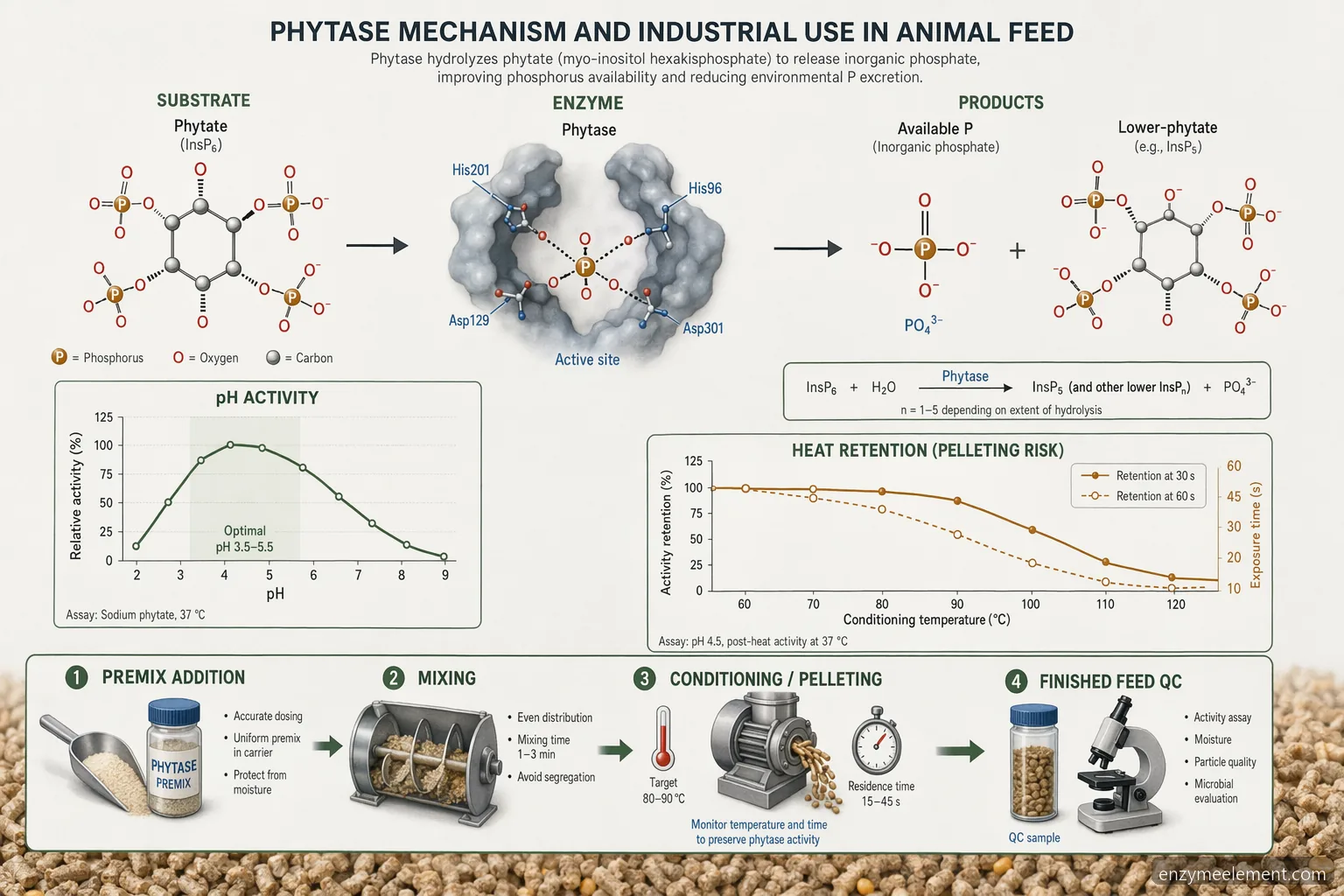
Most phytase products are selected for activity in acidic to mildly acidic conditions, commonly around pH 2.5 to 5.5, because hydrolysis should occur in the upper digestive tract where feed is exposed to low pH. Buyers should review the TDS for the specific product curve rather than assuming all phytase behaves the same. Thermal exposure is equally important. Mash feed places less stress on the enzyme, while pelleting may expose it to conditioning temperatures from about 75°C to 90°C for short residence times, with higher local temperatures possible. Granulated, coated, or intrinsically thermostable formats may improve post-pellet recovery, but performance must be measured in the buyer’s process. Liquid phytase can be applied after pelleting where equipment allows uniform spraying and controlled dosing. Moisture, steam quality, conditioner time, die configuration, and cooling rate can all influence final enzyme activity.
Review product-specific pH activity data • Confirm post-pellet enzyme recovery at actual mill settings • Validate liquid application uniformity if dosing after pelleting • Avoid relying only on supplier literature without plant trials
Dosage Bands and Matrix Value Validation
Commercial dosage is usually expressed in FTU or equivalent activity units per kilogram of finished feed, but unit definitions and analytical methods can vary. Typical inclusion targets may range from about 250 to 1,000 FTU/kg for standard phosphorus release programs, while higher levels, sometimes 1,000 to 2,000 FTU/kg or more, may be evaluated for more aggressive phytate reduction strategies. The correct dose depends on diet composition, target available phosphorus release, calcium level, species, life stage, safety margins, and expected processing loss. A phytase enzyme supplier for animal feed should provide matrix recommendations, but the nutrition team should validate them under local ingredient and production conditions. Overstating matrix value can create performance risk, while underusing the enzyme reduces economic benefit. Cost-in-use should compare enzyme cost, inorganic phosphate replacement, formulation changes, analytical costs, and any operational adjustments needed for stable dosing.
Common working range: approximately 250 to 1,000 FTU/kg finished feed • Higher-dose programs require stronger validation and monitoring • Matrix values should be approved by qualified nutrition personnel • Compare cost-in-use, not only price per kilogram
Quality Control for Incoming and Finished Feed
A robust QC program starts before purchase. Each batch should be supported by a COA showing activity, lot number, manufacturing date or retest date, and relevant physical parameters such as moisture, particle form, and appearance where applicable. The TDS should define activity units, recommended storage, compatibility limits, and process guidance. The SDS should be reviewed by EHS teams for handling, dust control, respiratory sensitization risk, and spill response. At receiving, feed mills can check packaging integrity, lot identity, storage temperature, and expiration status. For critical programs, retained samples and periodic third-party activity analysis help confirm supplier consistency. In finished feed, QC may include enzyme recovery testing, mixer uniformity checks, coefficient of variation testing, and sampling before and after pelleting. Because enzymes are low-inclusion functional ingredients, dosing calibration and scale verification are essential parts of process control.
Require COA, TDS, SDS, lot traceability, and activity method • Monitor storage temperature and humidity exposure • Check dosing equipment calibration and mixer uniformity • Use retained samples for dispute resolution and trend analysis
Supplier Qualification and Pilot Scale Approval
Selecting a phytase supplier for animal feed should follow a structured approval process. Buyers should assess manufacturing capability, batch-to-batch consistency, technical support, lead times, documentation quality, and ability to support regulatory requirements in the destination market. A phytase enzyme supplier for animal feed should provide clear specifications, practical handling guidance, and access to technical staff who understand feed mill operations. Before full conversion, run a pilot validation using representative diets, storage conditions, conditioning temperatures, and pelleting rates. Measure enzyme activity in the product as received, in mash, and in finished pellets or crumbles. Nutrition teams should also track mineral formulation, animal performance indicators, litter or manure phosphorus targets where relevant, and overall economics. The animal feed phytase market includes different production organisms, coatings, activities, and delivery formats, so qualification should be evidence-based rather than price-driven alone.
Use pilot trials before commercial rollout • Evaluate technical support as part of supplier qualification • Confirm local regulatory and labeling suitability • Document cost-in-use assumptions and approval criteria
Technical Buying Checklist
Buyer Questions
Phytase in animal feed is used to hydrolyze phytate, releasing phosphorus that is otherwise less available in many plant-based feed ingredients. This can help nutritionists adjust available phosphorus and calcium formulation strategies. The value depends on diet composition, enzyme dose, processing stability, and validated matrix values. It is an industrial feed application, not medical or supplement advice.
Many standard programs evaluate about 250 to 1,000 FTU/kg of finished feed, while higher-dose approaches may be tested for deeper phytate reduction. The right dose depends on species, life stage, diet ingredients, mineral targets, and expected pelleting loss. Always confirm the supplier’s activity unit definition and validate dose through pilot production and finished-feed enzyme recovery testing.
Some phytase products are designed for improved pelleting stability, but survival depends on the exact enzyme, coating or formulation, conditioning temperature, residence time, steam quality, moisture, die pressure, and cooling. Feed mills should not assume survival from label claims alone. Test activity in mash and finished pellets under actual operating conditions, especially around 75°C to 90°C conditioning temperatures.
A qualified phytase enzyme supplier for animal feed should provide a COA for each batch, a TDS with process and storage guidance, and an SDS for safe handling. Buyers should also request specification limits, activity method, lot traceability, shelf-life information, and any market-specific feed compliance statements required for the destination country or region.
Cost-in-use should include enzyme price, dose, activity recovery after processing, potential inorganic phosphate reduction, any changes to calcium or nutrient matrices, analytical testing, storage, and dosing equipment requirements. The lowest price per kilogram may not be the lowest cost in finished feed if activity is lower, recovery is poor, or technical support is limited.
Phytase for Research & Industry
Need Phytase for your lab or production process?
ISO 9001 certified · Food-grade & research-grade · Ships to 80+ countries
Frequently Asked Questions
What is phytase in animal feed used for?
Phytase in animal feed is used to hydrolyze phytate, releasing phosphorus that is otherwise less available in many plant-based feed ingredients. This can help nutritionists adjust available phosphorus and calcium formulation strategies. The value depends on diet composition, enzyme dose, processing stability, and validated matrix values. It is an industrial feed application, not medical or supplement advice.
What dose of phytase for animal feed should be evaluated?
Many standard programs evaluate about 250 to 1,000 FTU/kg of finished feed, while higher-dose approaches may be tested for deeper phytate reduction. The right dose depends on species, life stage, diet ingredients, mineral targets, and expected pelleting loss. Always confirm the supplier’s activity unit definition and validate dose through pilot production and finished-feed enzyme recovery testing.
Can phytase survive pelleting?
Some phytase products are designed for improved pelleting stability, but survival depends on the exact enzyme, coating or formulation, conditioning temperature, residence time, steam quality, moisture, die pressure, and cooling. Feed mills should not assume survival from label claims alone. Test activity in mash and finished pellets under actual operating conditions, especially around 75°C to 90°C conditioning temperatures.
What documents should a phytase supplier provide?
A qualified phytase enzyme supplier for animal feed should provide a COA for each batch, a TDS with process and storage guidance, and an SDS for safe handling. Buyers should also request specification limits, activity method, lot traceability, shelf-life information, and any market-specific feed compliance statements required for the destination country or region.
How should cost-in-use be calculated for phytase?
Cost-in-use should include enzyme price, dose, activity recovery after processing, potential inorganic phosphate reduction, any changes to calcium or nutrient matrices, analytical testing, storage, and dosing equipment requirements. The lowest price per kilogram may not be the lowest cost in finished feed if activity is lower, recovery is poor, or technical support is limited.
Related: Phytase Feed Activity & Assay
Turn This Guide Into a Supplier Brief Request a phytase animal feed specification review, sample plan, and pilot validation support from Enzyme Element. See our application page for Phytase Feed Activity & Assay at /applications/phytase-feed-activity-assay/ for specs, MOQ, and a free 50 g sample.
Contact Us to Contribute