Animal Feed Phytase Market: How to Use Phytase in Animal Feed Formulations
B2B guide to phytase in animal feed: dosage, pH, pelleting stability, QC, COA/TDS/SDS review, pilot trials, and supplier qualification.
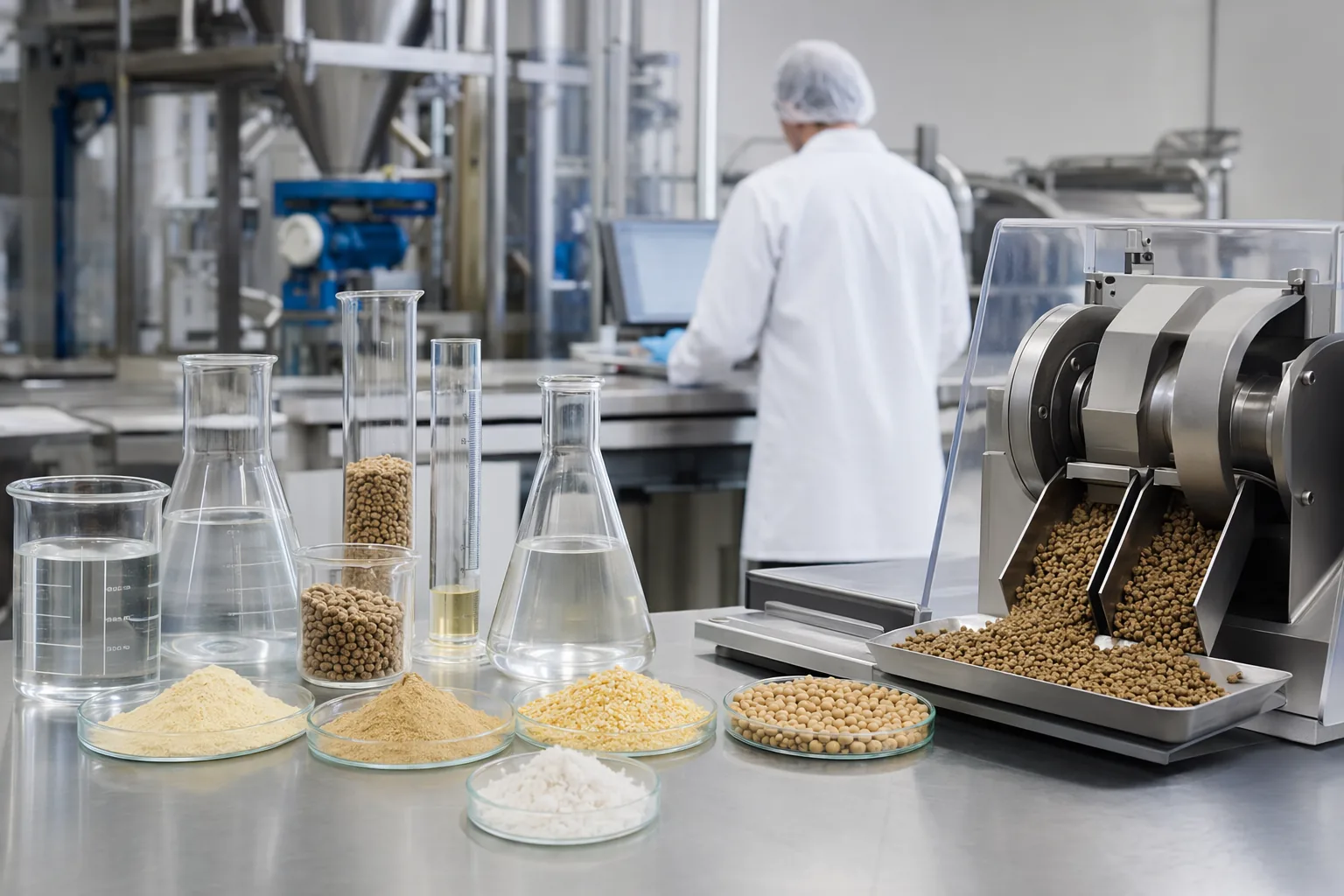
For feed mills, premix producers, and nutrition teams, phytase is a cost-in-use enzyme for releasing phytate-bound phosphorus while supporting more precise mineral formulation.
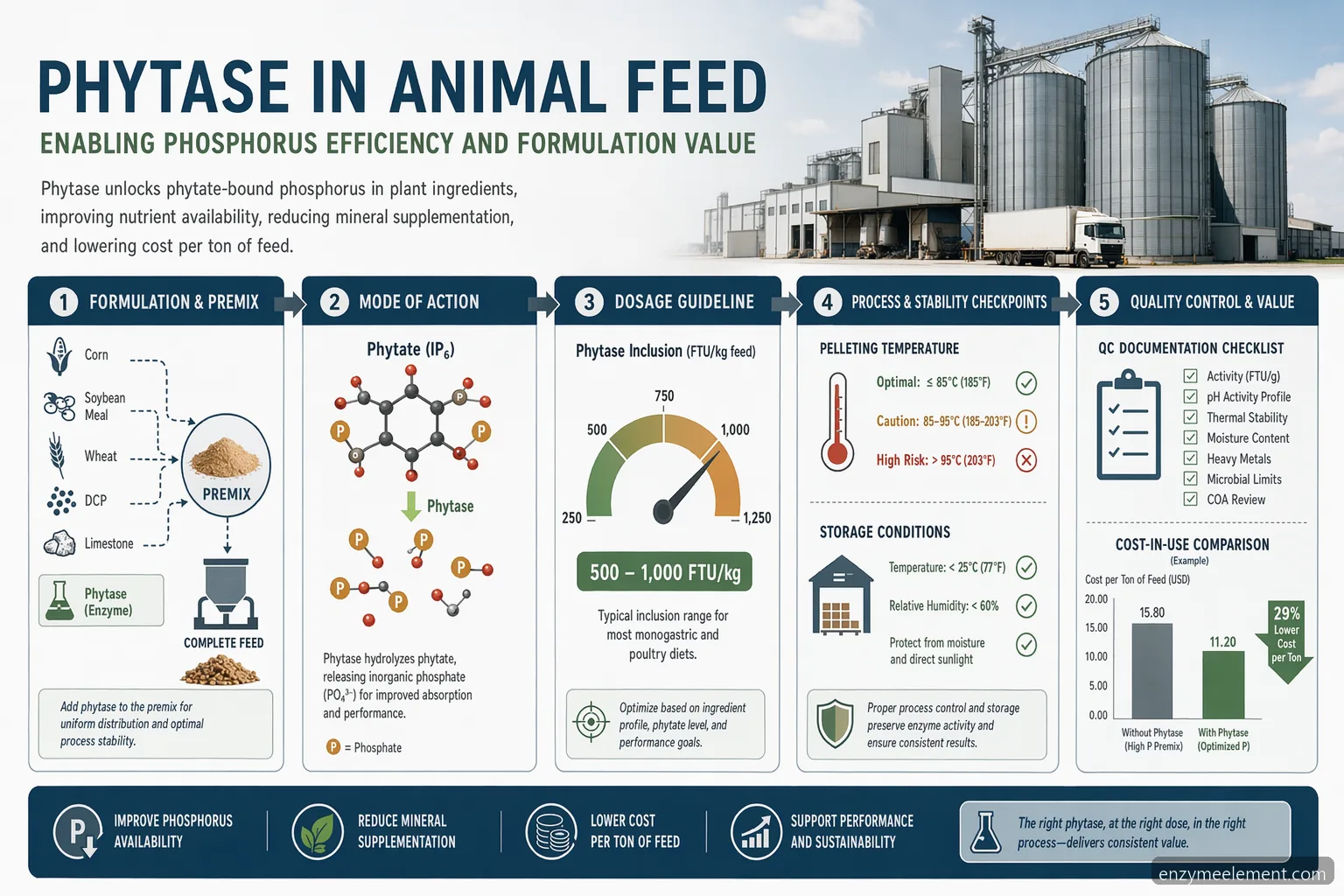
Market Context for Feed Formulators
The animal feed phytase market is driven by the need to improve phosphorus utilization, manage inorganic phosphate costs, and reduce nutrient over-formulation in poultry, swine, aquaculture, and other compound feeds. Phytase hydrolyzes phytate, the storage form of phosphorus in grains, oilseed meals, and many plant-based ingredients. In practical formulation, the enzyme is assigned a phosphorus, calcium, and sometimes amino acid or energy matrix only after validation in the target feed system. The same term may appear in broader searches such as phytase in food or plant nutrition, but this page focuses on industrial phytase in animal feed. Buyers should compare products by declared activity, activity method, heat tolerance, release profile at gastrointestinal pH, handling form, and cost per unit of available phosphorus released, not simply by price per kilogram.
Primary use: phosphorus release from phytate in plant-based feed materials • Main buying metric: cost-in-use per tonne of finished feed • Critical risk: applying nutrient credits before mill validation
How Phytase Works in Animal Feed
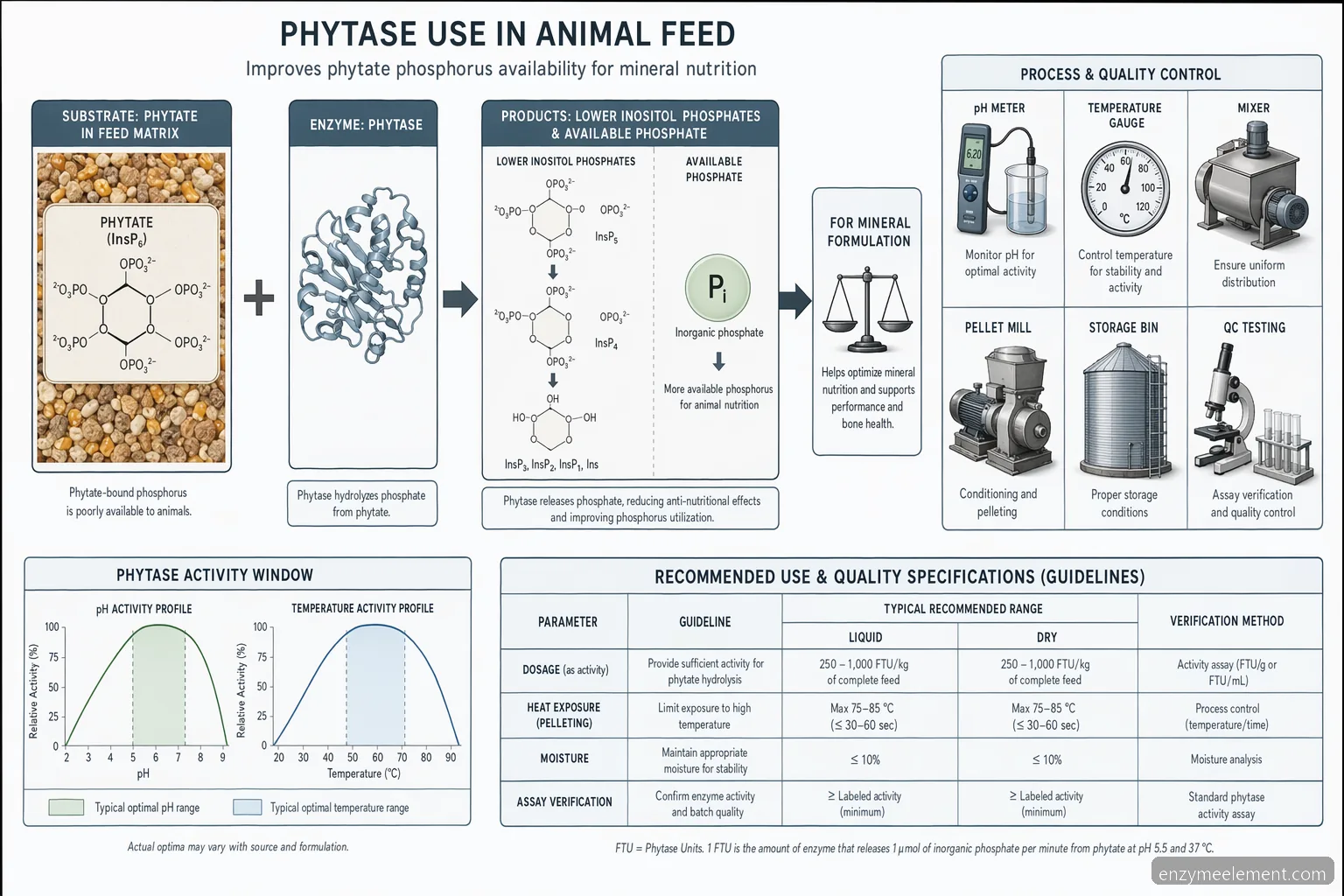
A phytase enzyme for animal feed catalyzes stepwise dephosphorylation of phytate, releasing phosphate under acidic conditions similar to the upper digestive tract of monogastric animals. Many commercial feed phytases are selected for useful activity between approximately pH 2.5 and 5.5, although the exact profile depends on the enzyme source and formulation. Performance is influenced by dietary calcium level, mineral solubility, feed particle size, gastric retention time, and the amount of phytate phosphorus available in the ration. For formulation, nutritionists normally review supplier matrix recommendations, then adjust available phosphorus and calcium values in the feed software. Conservative introduction is recommended when changing suppliers, enzyme form, or pelleting conditions, because equal FTU declarations do not always translate into identical release in the final feed.
Review pH activity curve from the TDS • Confirm the assay definition for FTU or equivalent activity units • Check whether matrix values are species- and diet-specific
Dosage Bands and Formulation Approach
Common phytase animal feed inclusion rates range from about 250 to 1,000 FTU/kg complete feed for standard phosphorus replacement, while higher levels such as 1,000 to 2,000 FTU/kg may be evaluated for broader phytate degradation strategies. The right dose depends on species, growth stage, phytate level, mineral targets, safety margins, and economic phosphate pricing. Formulators should avoid transferring a matrix from one product to another without checking enzyme activity, thermostability, and in vivo or digestibility support data. A practical workflow is to establish a control diet, reformulate with a conservative phosphorus release value, run feed manufacturing trials, then assess retained enzyme activity and animal performance indicators relevant to the operation. The most reliable phytase supplier for animal feed will support dosage selection with technical documentation and batch-consistent recommendations.
Standard range: 250-1,000 FTU/kg complete feed • High-dose evaluation: 1,000-2,000 FTU/kg where justified • Use diet-specific phytate phosphorus data when available • Confirm final activity after processing, not only premix activity
Processing Conditions: Mixing, Pelleting, and Storage
Feed manufacturing can reduce enzyme activity if temperature, moisture, pressure, or storage conditions exceed the product design limits. Dry granular phytase may be added in the mixer or premix, while liquid phytase is often applied post-pellet through spraying systems. For pelleted feed, conditioning temperatures around 75-85°C are common, and some processes may approach 90°C or higher for short residence times; actual enzyme retention must be measured for each line. Uniform distribution is also important, especially at low inclusion rates. Mills should monitor mixer coefficient of variation, dosing equipment calibration, carryover, dust generation, and moisture exposure. Store phytase in sealed packaging under the supplier’s recommended temperature and humidity limits, and rotate inventory by batch and expiry date to protect declared activity.
Measure retained activity after conditioning and pelleting • Validate liquid application uniformity if used post-pellet • Protect enzyme from excess moisture and prolonged heat • Track batch number, opening date, and storage location
QC Checks and Documentation Buyers Should Request
A qualified phytase enzyme supplier for animal feed should provide a current certificate of analysis, technical data sheet, and safety data sheet for the exact product grade supplied. The COA should identify batch number, declared activity, test method or reference method, appearance, moisture or relevant physical parameters, and release date. The TDS should state recommended application, dosage guidance, handling form, stability profile, pH activity range, and storage conditions. The SDS should cover occupational handling, dust control, accidental release, and transport information. Feed mills should add incoming inspection, retain samples, and verify enzyme activity through an internal or third-party laboratory when high-value matrix credits are used. Supplier qualification should also review traceability, change-control communication, lead time reliability, and technical support responsiveness.
Request COA, TDS, SDS, and batch traceability • Check activity method and acceptance range • Keep retain samples from incoming lots • Document supplier change-control expectations
Pilot Validation and Cost-in-Use Calculation
Before full rollout, conduct a pilot validation using the actual ingredients, premix system, conditioner settings, pellet die, and storage conditions used in production. Compare a control diet with one or more phytase treatments, then evaluate retained enzyme activity, feed phosphorus and calcium specifications, pellet quality, and relevant farm or digestibility indicators. Cost-in-use should include enzyme price, inclusion rate, expected reduction in inorganic phosphate, any change in limestone or mineral balance, application equipment needs, and quality-control testing. A lower purchase price may be less attractive if retained activity is poor or matrix confidence is weak. For procurement teams, the best phytase for animal feed is the product that delivers consistent release, documented stability, practical handling, and predictable economics in the buyer’s own feed mill.
Run pilot trials before assigning aggressive nutrient credits • Calculate savings per tonne of complete feed • Include QC, handling, and application costs • Use retained activity data to support final formulation values
Technical Buying Checklist
Buyer Questions
Phytase in animal feed is used to hydrolyze phytate, releasing phosphorus that is otherwise poorly available in many plant-based ingredients. This helps nutritionists reduce reliance on inorganic phosphate sources when supported by formulation data. It is an industrial feed enzyme application, not medical supplement advice. Matrix values should be validated for the target species, diet type, processing conditions, and supplier product.
Many commercial programs evaluate 250-1,000 FTU/kg complete feed for standard phosphorus release, while higher levels such as 1,000-2,000 FTU/kg may be tested for specific phytate-reduction strategies. The starting point should come from the supplier TDS, diet phytate level, species requirements, and economic goals. Confirm retained activity after processing before using aggressive phosphorus or calcium credits.
Some phytase products are designed for feed pelleting, but survival depends on enzyme type, coating or formulation, conditioning temperature, moisture, residence time, die pressure, and cooling. Processes around 75-85°C are common, and some lines run higher. Do not assume retention from the label alone. Test enzyme activity in mash and finished pellets under the mill’s actual operating conditions.
Qualification should include review of COA, TDS, SDS, activity method, batch traceability, storage guidance, stability data, technical support, lead time reliability, and change-control practices. Buyers should also run a pilot trial in their own feed system. A strong phytase enzyme supplier for animal feed supports cost-in-use analysis and provides practical guidance for formulation and processing validation.
The enzyme function may be similar, but phytase in food and phytase for animal feed are different application categories with different grade requirements, regulatory pathways, documentation, and performance targets. Feed buyers should evaluate products specifically intended for animal feed use. Request the correct TDS, SDS, COA, and application guidance for the feed grade being purchased.
Phytase for Research & Industry
Need Phytase for your lab or production process?
ISO 9001 certified · Food-grade & research-grade · Ships to 80+ countries
Frequently Asked Questions
What is phytase in animal feed used for?
Phytase in animal feed is used to hydrolyze phytate, releasing phosphorus that is otherwise poorly available in many plant-based ingredients. This helps nutritionists reduce reliance on inorganic phosphate sources when supported by formulation data. It is an industrial feed enzyme application, not medical supplement advice. Matrix values should be validated for the target species, diet type, processing conditions, and supplier product.
What dosage of phytase should a feed mill start with?
Many commercial programs evaluate 250-1,000 FTU/kg complete feed for standard phosphorus release, while higher levels such as 1,000-2,000 FTU/kg may be tested for specific phytate-reduction strategies. The starting point should come from the supplier TDS, diet phytate level, species requirements, and economic goals. Confirm retained activity after processing before using aggressive phosphorus or calcium credits.
Can phytase survive pelleting temperatures?
Some phytase products are designed for feed pelleting, but survival depends on enzyme type, coating or formulation, conditioning temperature, moisture, residence time, die pressure, and cooling. Processes around 75-85°C are common, and some lines run higher. Do not assume retention from the label alone. Test enzyme activity in mash and finished pellets under the mill’s actual operating conditions.
How should buyers qualify a phytase supplier for animal feed?
Qualification should include review of COA, TDS, SDS, activity method, batch traceability, storage guidance, stability data, technical support, lead time reliability, and change-control practices. Buyers should also run a pilot trial in their own feed system. A strong phytase enzyme supplier for animal feed supports cost-in-use analysis and provides practical guidance for formulation and processing validation.
Is phytase in food the same as phytase for animal feed?
The enzyme function may be similar, but phytase in food and phytase for animal feed are different application categories with different grade requirements, regulatory pathways, documentation, and performance targets. Feed buyers should evaluate products specifically intended for animal feed use. Request the correct TDS, SDS, COA, and application guidance for the feed grade being purchased.
Related: Phytase Feed Activity & Assay
Turn This Guide Into a Supplier Brief Request phytase specifications, samples, and pilot-support data for your animal feed formulation program. See our application page for Phytase Feed Activity & Assay at /applications/phytase-feed-activity-assay/ for specs, MOQ, and a free 50 g sample.
Contact Us to Contribute