Phytase Enzyme for Poultry: How to Use Phytase in Animal Feed Formulations
Formulate poultry feed with phytase: dosage, pH, pelleting stability, QC, cost-in-use, and supplier qualification for industrial buyers.
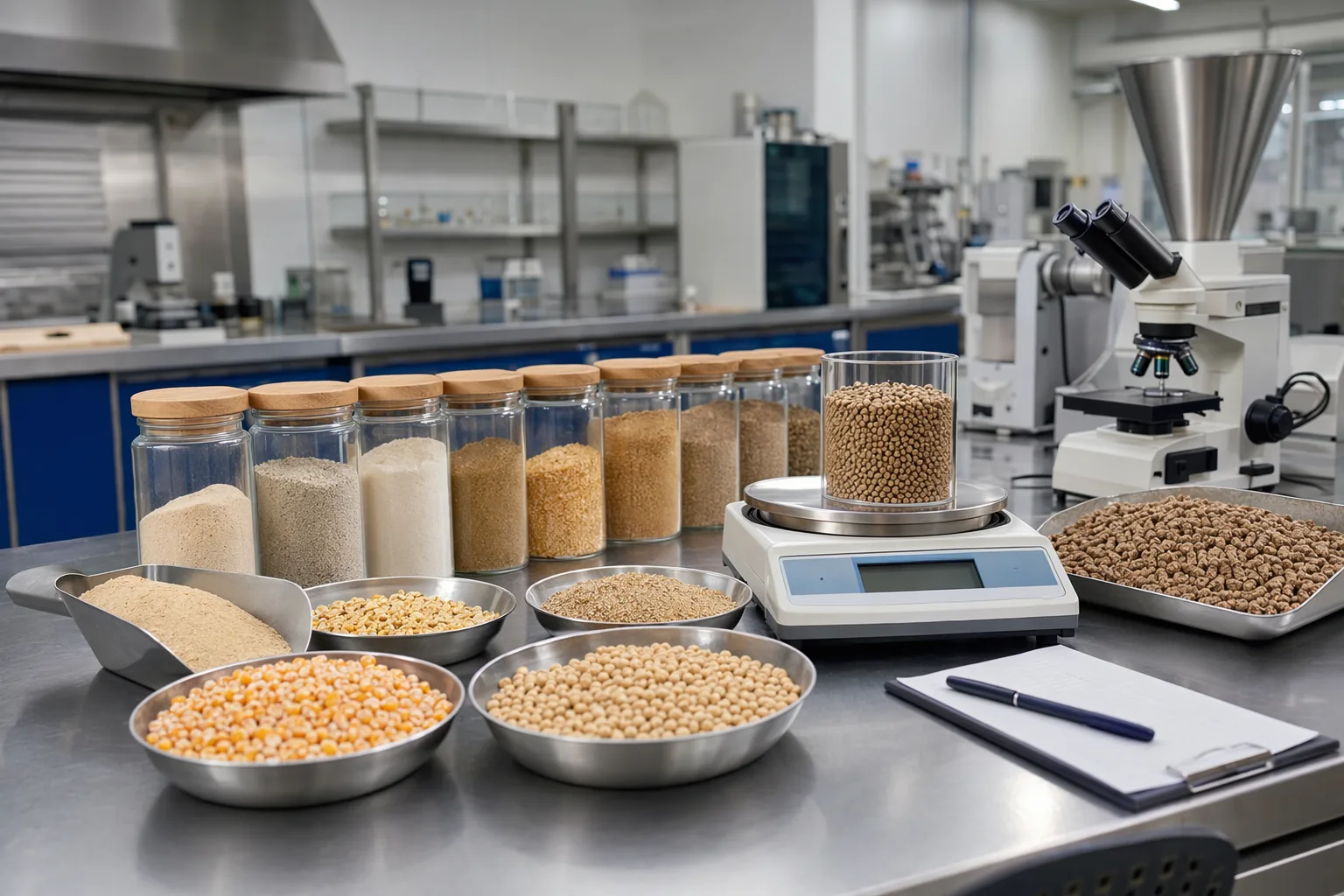
Phytase helps poultry nutrition teams release phytate-bound phosphorus, refine mineral matrices, and manage feed cost when it is selected, processed, and validated correctly.
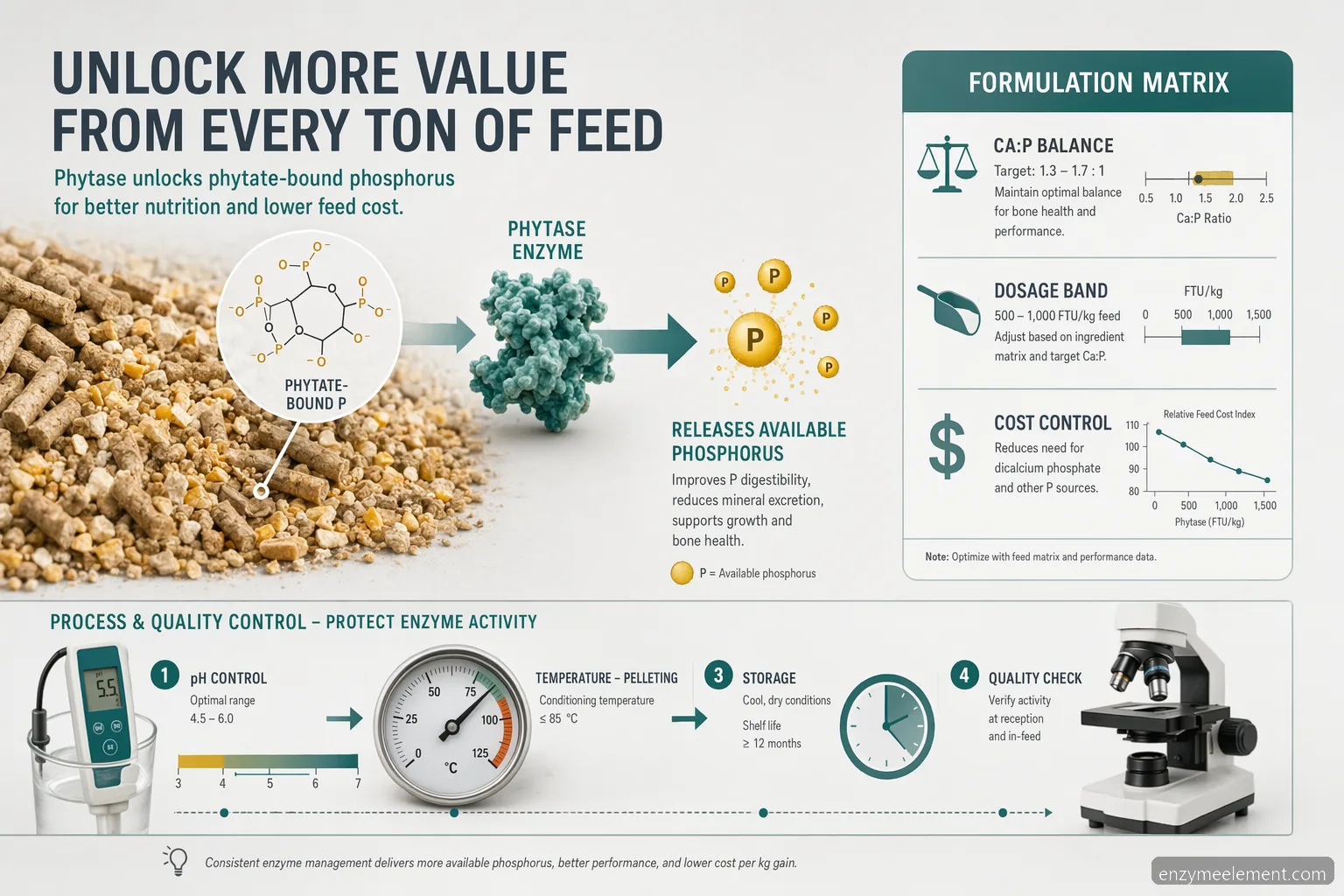
What Is Phytase Enzyme in Poultry Feed?
Phytase is a phosphorus release enzyme used in animal feed to break down phytate, the main storage form of phosphorus in grains and oilseed meals. In corn-soy poultry diets, phytate can bind phosphorus, calcium, amino acids, and trace minerals, limiting nutrient availability. A phytase enzyme for poultry is formulated to work during feed hydration and early digestion, especially through acidic regions such as the proventriculus and gizzard. The practical objective is not simply to add an enzyme; it is to assign a reliable nutrient matrix so formulators can reduce inorganic phosphate, manage calcium-phosphorus balance, and maintain bird performance targets. For B2B feed manufacturers, phytase selection should be tied to raw material variability, desired matrix release, processing conditions, and analytical recovery in the finished feed.
Primary use: release phytate-bound phosphorus. • Common substrates: corn, wheat, soybean meal, canola meal, and by-products. • Key formulation impact: available phosphorus, calcium balance, and cost-in-use.
Choosing the Best Phytase Enzyme for Poultry Feed
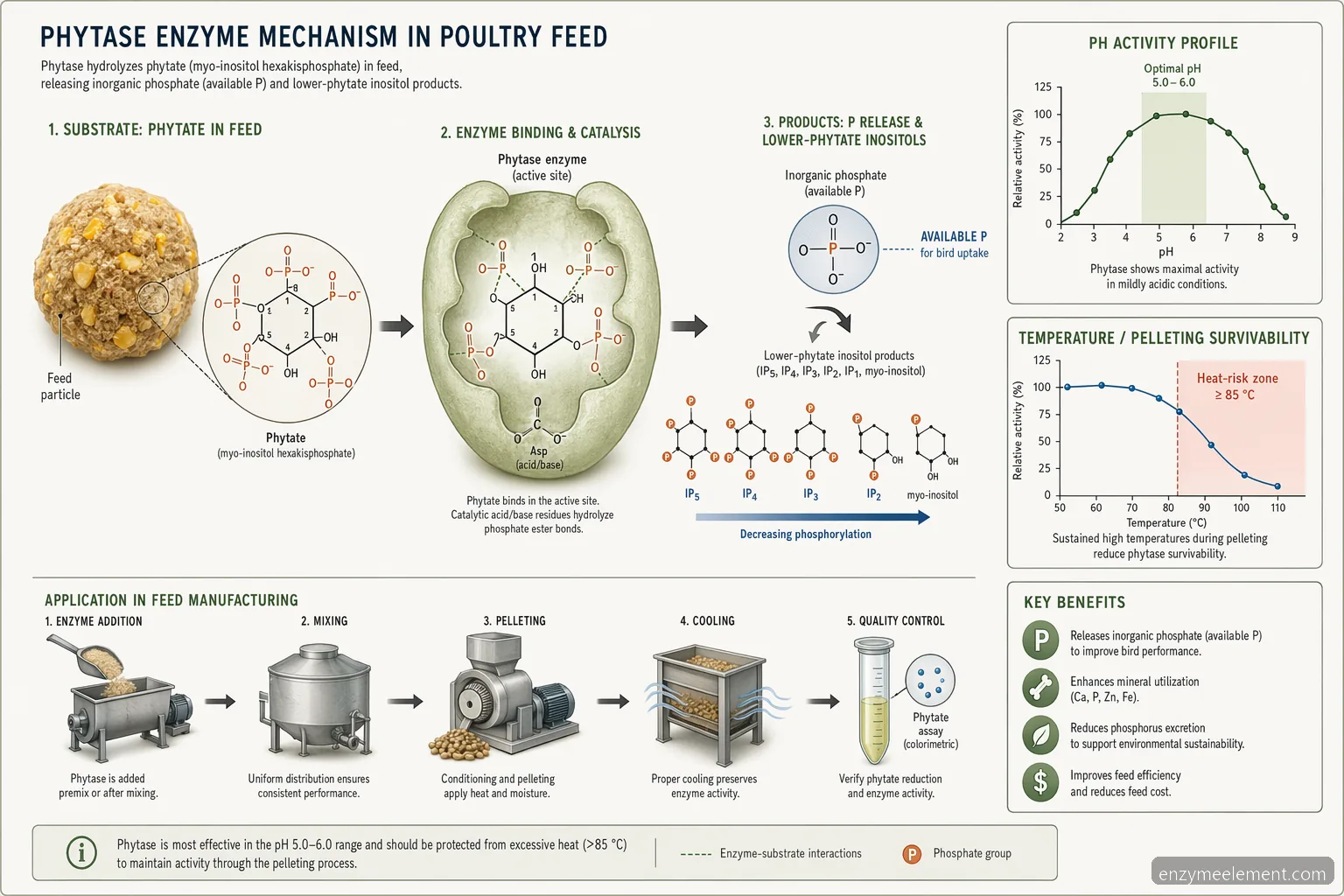
The best phytase enzyme for poultry feed is the product that delivers consistent activity under your formulation and feed mill conditions, not necessarily the highest label activity. Buyers should compare the enzyme source, declared FTU activity, activity curve across pH, granulation or coating technology, pelleting recovery, shelf life, and compatibility with premixes, acids, minerals, and coccidiostats where applicable. Many phytase products are designed for acidic activity, commonly showing useful performance in roughly pH 2.5-5.5, but exact optima vary by product and should be confirmed in the TDS. For mash feeds, mixing uniformity and dust control may matter most. For pelleted broiler or layer feeds, heat tolerance and post-pellet recovery become decisive. Supplier data should be supported by batch-specific documentation and your own pilot validation.
Check pH activity profile, not only label FTU. • Confirm thermostability at your conditioning temperature and retention time. • Compare granular, coated, and liquid post-pellet options.
Dosage Bands and Formulation Matrix Values
Common phytase in poultry feed inclusion levels often fall around 500-1,500 FTU/kg complete feed, with higher strategic levels used in some programs after controlled validation. The correct dosage depends on bird species and phase, dietary phytate level, calcium level, expected phosphorus release, feed form, and economics. A supplier may provide matrix values for available phosphorus, calcium, sodium, amino acids, and metabolizable energy, but these should be treated as formulation inputs requiring confirmation. Over-crediting the matrix can create deficiencies; under-crediting may leave savings unrealized. For industrial use, evaluate phytase enzyme cost per metric ton, expected reduction in monocalcium or dicalcium phosphate, mineral safety margins, and finished feed recovery. A practical trial should include negative control, positive control, and phytase reformulated diets to establish cost-in-use.
Typical starting range: 500-1,500 FTU/kg finished feed. • Use supplier matrix values conservatively until validated. • Track inorganic phosphate savings against enzyme cost.
Process Conditions: Mixing, Pelleting, and Storage
Phytase enzyme in poultry feed can lose activity through poor handling, uneven mixing, excessive heat, moisture, or long storage under harsh conditions. Dry phytase should be added through a validated micro-ingredient system or premix carrier with suitable flowability. Mixing time should be verified by a homogeneity study, and the target coefficient of variation is commonly set at 10% or lower for micro-ingredients, depending on internal standards. Pelleting is a major risk point. Conditioning temperatures of 75-90°C are common in poultry mills, but enzyme survival depends on exposure time, moisture, pressure, and protective coating. Liquid phytase may be applied post-pellet when heat recovery is inadequate. Finished feed should be stored cool and dry, with humidity control and first-in, first-out inventory rotation.
Validate mixer uniformity before commercial release. • Measure enzyme recovery after pelleting, not only before pelleting. • Control moisture, heat exposure, and storage time.
QC Checks for Phytase Animal Feed Programs
A robust phytase animal feed program needs quality control at raw material, enzyme, premix, and finished feed stages. Incoming enzyme lots should be checked against the COA for declared activity, batch number, production date, expiry, appearance, and packaging integrity. Finished feed testing should use a validated phytase activity method reported in FTU/kg, with sampling procedures that account for segregation and pellet variation. Nutrition teams should also monitor total phosphorus, calcium, and phytate phosphorus in key raw materials because formulation response depends on substrate availability. In production, compare theoretical inclusion, mixer records, scale calibration, pellet recovery, and retained sample results. If results drift, investigate dosing equipment, premix carryover, heat exposure, and storage conditions before changing the nutrition matrix.
Review COA results for every incoming lot. • Test finished feed FTU/kg against target and tolerance. • Keep retained samples for troubleshooting.
Supplier Qualification for Industrial Phytase Buyers
Industrial buyers should qualify phytase suppliers through technical, quality, regulatory, and commercial review. Request a current TDS for application guidance, an SDS for safe handling, and a COA for each batch shipped. The supplier should provide declared activity method, recommended dose range, pH and temperature performance data, storage conditions, packaging options, and compatibility guidance. For poultry feed formulation, ask for pilot-scale or commercial-scale evidence relevant to your feed form and processing temperature. Commercial evaluation should include delivered cost, dosing convenience, inventory stability, recovery after pelleting, and documented matrix value assumptions. Avoid relying on unverifiable claims or generic enzyme descriptions. A strong supplier can support pilot validation, troubleshooting, and scale-up without overstating performance beyond the available data.
Request COA, TDS, SDS, and batch traceability. • Run pilot validation before full matrix adoption. • Evaluate cost-in-use, not only price per kilogram.
Technical Buying Checklist
Buyer Questions
Phytase is an enzyme that hydrolyzes phytate, releasing phosphorus that is naturally bound in plant-based feed ingredients. In poultry diets, it helps nutritionists reduce reliance on inorganic phosphate while maintaining a controlled calcium-phosphorus program. Its value depends on the bird phase, substrate level, enzyme recovery after processing, and the matrix values used in the feed formulation.
Many commercial poultry programs use phytase at approximately 500-1,500 FTU/kg finished feed, but the correct dose is product- and formulation-specific. Higher levels may be considered only after technical and economic validation. Always follow the supplier TDS, confirm activity recovery in finished feed, and validate phosphorus release through pilot or field performance data before applying aggressive matrix credits.
Some phytase products are formulated for pelleting stability, but survival is not automatic. Conditioning temperature, retention time, moisture, die pressure, and coating technology all influence recovery. Because poultry feed mills often operate around 75-90°C, finished pellet testing is essential. If recovery is low, consider a more thermostable grade, process adjustment, or post-pellet liquid application.
Phytase in food processing and phytase in animal feed may share the same enzymatic function, but specifications, carriers, regulatory status, dosage logic, and quality documentation can differ. A feed-grade phytase enzyme should be evaluated for feed application, pelleting recovery, animal nutrition matrix values, and safe handling documentation. Do not substitute products across applications without supplier and regulatory review.
A qualified supplier should provide a technical data sheet, safety data sheet, and batch-specific certificate of analysis. For B2B purchasing, also request declared activity method, shelf-life data, storage requirements, packaging details, traceability, and application guidance. Before approval, confirm whether the supplier can support pilot validation, finished feed testing, cost-in-use calculations, and troubleshooting during scale-up.
Phytase for Research & Industry
Need Phytase for your lab or production process?
ISO 9001 certified · Food-grade & research-grade · Ships to 80+ countries
Frequently Asked Questions
What is phytase enzyme and why is it used in poultry diets?
Phytase is an enzyme that hydrolyzes phytate, releasing phosphorus that is naturally bound in plant-based feed ingredients. In poultry diets, it helps nutritionists reduce reliance on inorganic phosphate while maintaining a controlled calcium-phosphorus program. Its value depends on the bird phase, substrate level, enzyme recovery after processing, and the matrix values used in the feed formulation.
How much phytase enzyme should be added to poultry feed?
Many commercial poultry programs use phytase at approximately 500-1,500 FTU/kg finished feed, but the correct dose is product- and formulation-specific. Higher levels may be considered only after technical and economic validation. Always follow the supplier TDS, confirm activity recovery in finished feed, and validate phosphorus release through pilot or field performance data before applying aggressive matrix credits.
Can phytase survive poultry feed pelleting?
Some phytase products are formulated for pelleting stability, but survival is not automatic. Conditioning temperature, retention time, moisture, die pressure, and coating technology all influence recovery. Because poultry feed mills often operate around 75-90°C, finished pellet testing is essential. If recovery is low, consider a more thermostable grade, process adjustment, or post-pellet liquid application.
Is phytase in food the same as phytase in animal feed?
Phytase in food processing and phytase in animal feed may share the same enzymatic function, but specifications, carriers, regulatory status, dosage logic, and quality documentation can differ. A feed-grade phytase enzyme should be evaluated for feed application, pelleting recovery, animal nutrition matrix values, and safe handling documentation. Do not substitute products across applications without supplier and regulatory review.
What documents should a phytase supplier provide?
A qualified supplier should provide a technical data sheet, safety data sheet, and batch-specific certificate of analysis. For B2B purchasing, also request declared activity method, shelf-life data, storage requirements, packaging details, traceability, and application guidance. Before approval, confirm whether the supplier can support pilot validation, finished feed testing, cost-in-use calculations, and troubleshooting during scale-up.
Related: Phytase Feed Activity & Assay
Turn This Guide Into a Supplier Brief Request phytase specifications, sample options, and formulation support for your poultry feed program. See our application page for Phytase Feed Activity & Assay at /applications/phytase-feed-activity-assay/ for specs, MOQ, and a free 50 g sample.
Contact Us to Contribute