Phytase Powder for Animal Feed: Supplier Guide
Source phytase powder for feed with guidance on activity, dosage, pelleting stability, QC, COA/TDS/SDS, and cost-in-use validation.
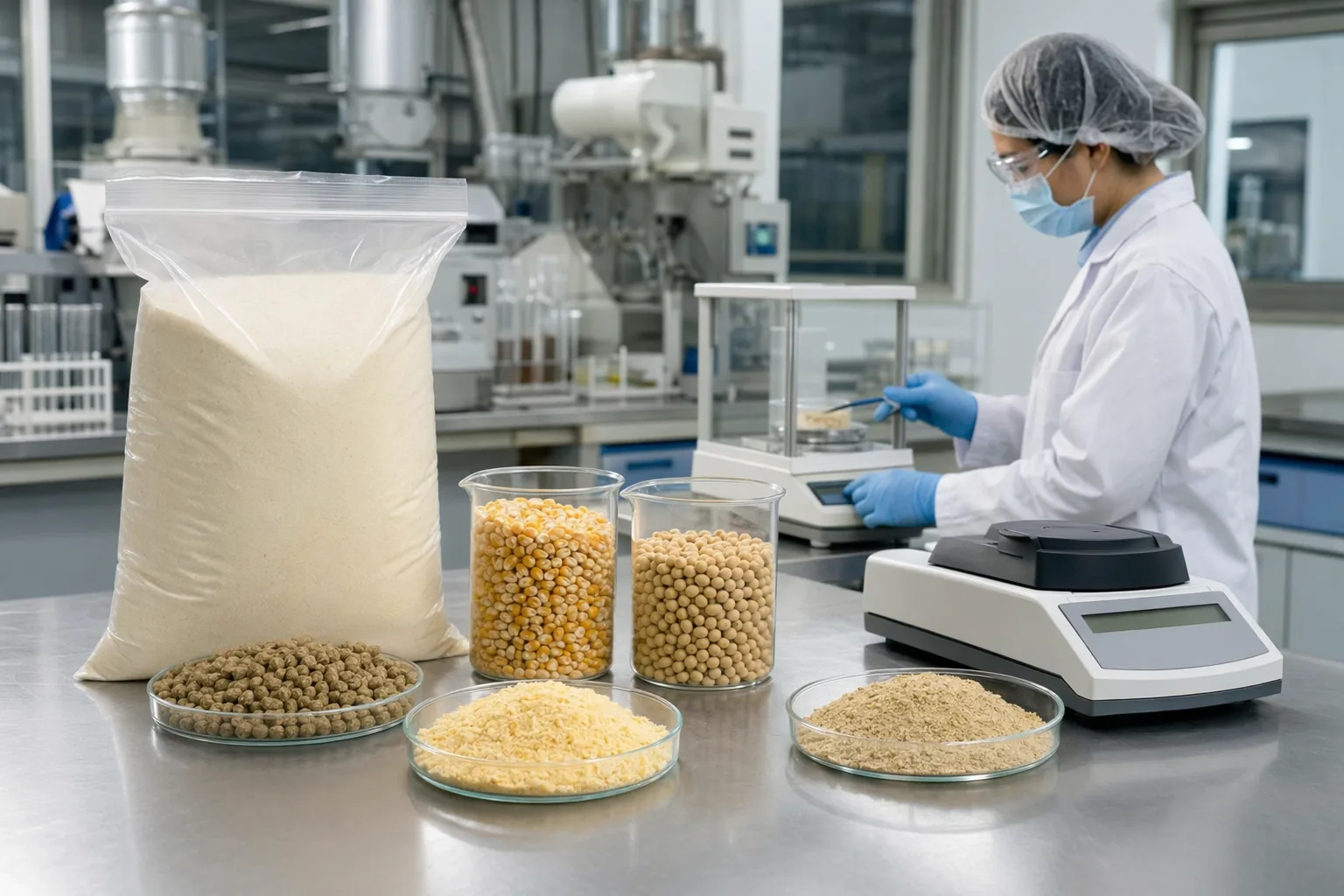
A practical sourcing guide for feed mills, premix manufacturers, integrators, and aquaculture producers evaluating phytase powder for reliable phosphorus release and formulation savings.
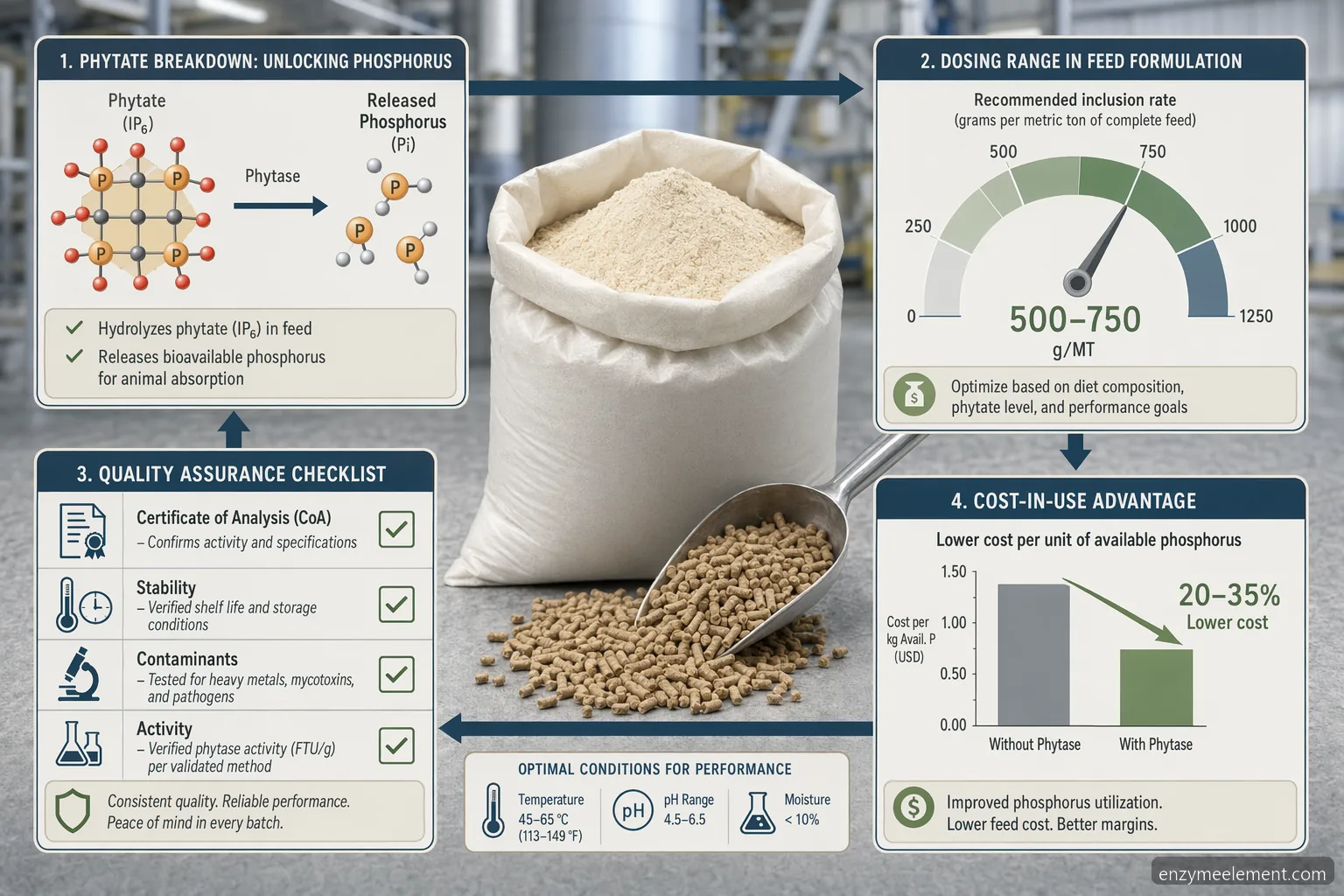
What Is Phytase Powder in Feed Manufacturing?
A practical phytase definition for industrial buyers is simple: phytase is a phosphorus release enzyme that hydrolyzes phytate, the main storage form of phosphorus in grains, oilseed meals, and many plant proteins. In animal feed, phytase powder helps make bound phosphorus more available to poultry, swine, aquaculture species, and other monogastric animals. This can support lower inorganic phosphate inclusion, reduce phosphorus excretion, and improve formulation flexibility when validated in the target diet. Buyers searching what is phytase or phytase enzyme should distinguish feed-grade enzyme products from general discussions of phytase in food or nutrition. For B2B use, the key questions are not medical or supplement related; they are activity, stability, compatibility, documentation, and cost-in-use. A qualified supplier should define activity in FTU, provide a clear recommended dose range, and support plant trials under actual mixing, pelleting, storage, and feeding conditions.
Primary function: release phytate-bound phosphorus • Main market: animal feed and premix production • Common form: dry phytase powder for blending • Key metric: FTU activity per gram
Typical Process Conditions and Dosage Bands
Most commercial phytase powder products are designed to operate in acidic digestive conditions, commonly around pH 2.5-5.5, where phytate degradation is most relevant for poultry and swine. Performance also depends on residence time, mineral levels, phytate content, feed form, and species. Typical inclusion rates range from 250-1,000 FTU/kg complete feed for standard phosphorus replacement programs, while higher matrix strategies may evaluate 1,000-2,000 FTU/kg under nutritionist supervision. Pelleted feeds require special attention because mash conditioning may reach 75-90°C, and short exposure at high moisture can reduce enzyme activity. Thermostable, coated, or post-pellet liquid alternatives may be considered when conditioning is severe. For aquaculture, water stability, extrusion temperature, and species-specific digestibility should be reviewed. The safest purchasing approach is to treat supplier dosage guidance as a starting point, then confirm retained activity and performance in pilot-scale production.
Common activity target: 250-2,000 FTU/kg feed • Relevant pH window: often 2.5-5.5 • Pelleting risk zone: 75-90°C conditioning • Validate retained FTU after processing
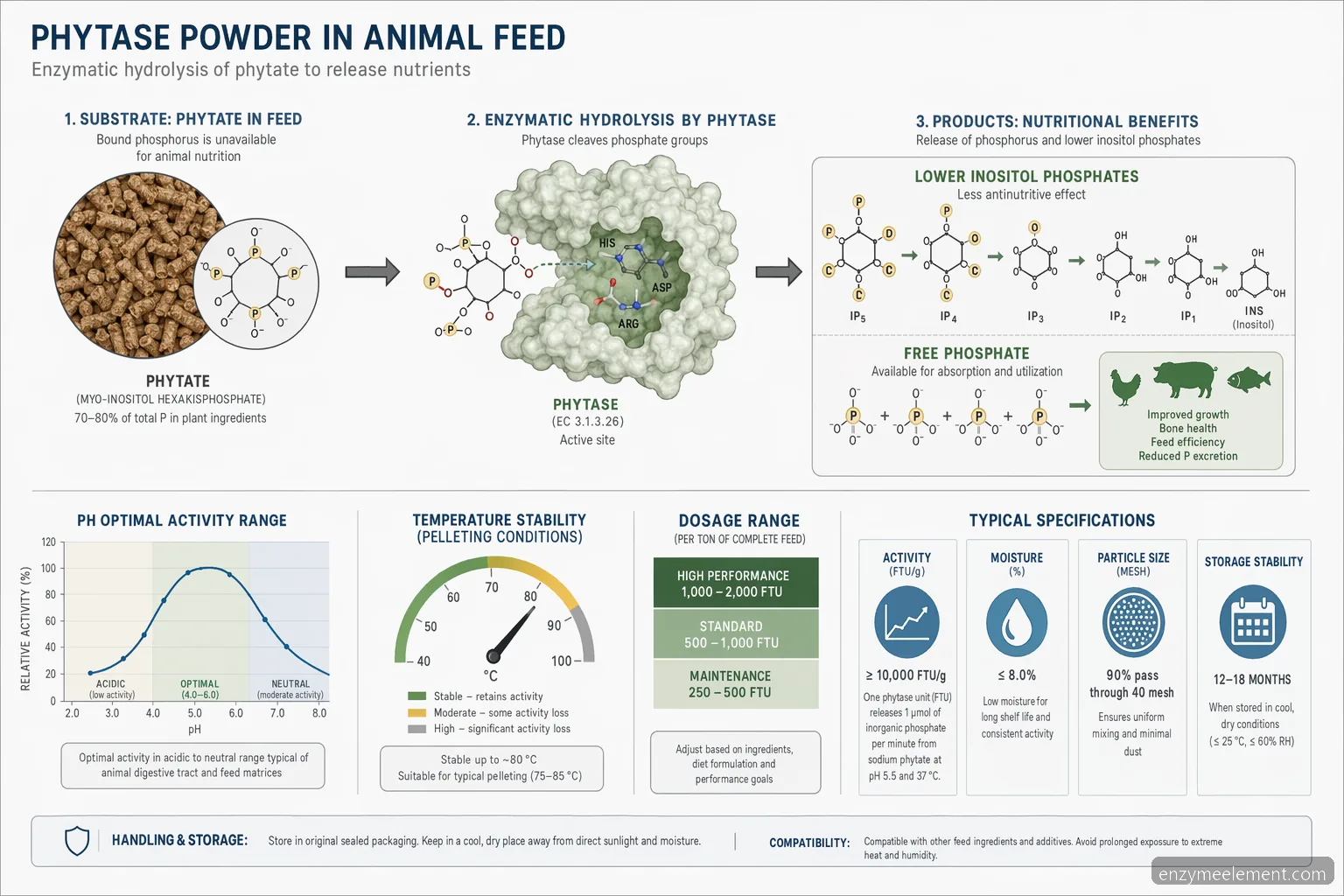
Quality Documents Buyers Should Request
A phytase animal feed supplier should provide a complete technical document set before price negotiation becomes final. The COA should identify batch number, enzyme activity, moisture, appearance, and any agreed microbiological or contaminant checks. The TDS should state enzyme source, activity unit definition, carrier information, recommended dosage, application method, storage temperature, shelf life, and compatibility notes. The SDS should cover safe handling, dust control, spill response, and worker protection. For imported or regulated feed markets, buyers should also ask which feed-use declarations, ingredient descriptions, and country-specific documentation are available, without assuming approvals that are not documented. If the product is promoted with terms such as zinc phytase, mineral-compatible phytase, or broad-spectrum phytase, request data that explains the claim. Strong suppliers make documentation easy to audit and can connect each specification to a repeatable QC method.
COA for every batch • TDS with dosage and stability guidance • SDS for safe industrial handling • Documented analytical methods • Country-specific feed documentation when required
Supplier Qualification and Pilot Validation
Supplier qualification should combine desk review, sample testing, and plant validation. Start by confirming manufacturing capability, batch traceability, complaint handling, lead time, packaging options, and capacity to supply consistent phytase powder through seasonal demand. Then compare samples using the same analytical method for FTU/g, moisture, bulk density, particle size, and flow behavior. In a feed mill, evaluate mixing uniformity, segregation risk, dusting, and retained activity after conditioning or pelleting. A small pilot should mirror the buyer’s real formula, mixer load, conditioning temperature, retention time, and storage period. Finished feed should be checked soon after production and again after storage to estimate activity loss. For cost-in-use, nutritionists should compare the enzyme matrix value against inorganic phosphate, calcium balance, feed conversion targets, and manure phosphorus objectives. A low price per kilogram is not enough if retained activity is inconsistent.
Test the same batch before and after processing • Review packaging, storage, and lead time • Confirm traceability and complaint response • Use real formulas in pilot trials
Formulation Fit, Compatibility, and Cost-in-Use
Phytase powder value depends on how well it fits the formula and process. Corn-soy diets, wheat-based diets, rice bran, oilseed meals, and alternative plant proteins can differ substantially in phytate phosphorus level. Mineral premixes, organic acids, enzymes, probiotics, and heat treatments may also influence final performance. Buyers should review compatibility with other feed additives and avoid making assumptions based on unrelated search phrases such as cheese powder corn steep liquor phytase unless the supplier clearly explains the carrier, fermentation substrate, or formulation relevance. Cost-in-use should include enzyme dose, retained FTU, available phosphorus release, dicalcium or monocalcium phosphate replacement, calcium adjustment, logistics, storage losses, and production convenience. For feed mills running both mash and pelleted products, one phytase enzyme may not be optimal for every line. The right product is the one that delivers predictable value in the buyer’s own feed system.
Compare cost per retained FTU, not only price per kg • Check additive compatibility in the actual premix • Adjust phosphorus and calcium together • Separate mash and pelleted-feed assumptions
Market Updates Without Overstated Claims
Phytase news often highlights new enzyme variants, higher thermal stability, expanded aquaculture use, plant nutrition research, or environmental phosphorus management. These updates can be useful, but B2B buyers should separate marketing language from validated specifications. Ask whether reported benefits were measured in vitro, in controlled feeding trials, or in commercial mills. Confirm whether the activity method matches your procurement specification and whether matrix values are supported for your species and diet type. For plant nutrition or soil applications, the formulation requirements may differ from animal feed, so do not transfer claims without validation. A responsible supplier will avoid unverifiable performance guarantees and instead provide data packages, samples, and trial support. When evaluating phytase powder, the best commercial decision is usually evidence-based: documented activity, stable processing performance, qualified technical service, and transparent economics.
Separate trial data from marketing claims • Confirm the activity method used • Do not transfer claims between applications blindly • Prioritize transparent economics and documentation
Technical Buying Checklist
Buyer Questions
Phytase powder is used to release phosphorus bound in phytate from plant-based feed ingredients such as corn, soybean meal, wheat, and oilseed meals. This can help nutritionists reduce inorganic phosphate use and manage phosphorus excretion when the formulation is properly adjusted. Buyers should evaluate the product by FTU activity, pH performance, processing stability, and validated matrix values for the target species.
Typical commercial programs use about 250-1,000 FTU/kg complete feed, while higher-dose strategies may evaluate 1,000-2,000 FTU/kg. The correct dosage depends on diet phytate level, species, age, target phosphorus release, calcium level, and processing loss. Supplier guidance should be confirmed by pilot production and nutritionist review rather than applied as a universal number.
Some phytase powder products can tolerate moderate pelleting, but retained activity depends on conditioning temperature, moisture, retention time, pressure, and formulation. Mash conditioning around 75-90°C can reduce activity if the product is not sufficiently protected. Buyers should request thermal stability data and test retained FTU after their own pellet mill process before committing to commercial dosage or matrix values.
A qualified supplier should provide a COA for each batch, a TDS with application and storage guidance, and an SDS for safe handling. Buyers may also request activity method details, stability data, carrier information, traceability records, and destination-market feed documentation when required. These documents help procurement, quality, regulatory, and formulation teams evaluate the product consistently.
Compare phytase powder by cost per retained FTU and verified feed value, not only by price per kilogram. A lower-cost product may be less economical if it loses activity during pelleting, stores poorly, or requires higher inclusion. Cost-in-use should include phosphorus matrix value, calcium adjustment, logistics, storage conditions, QC testing, and the supplier’s ability to deliver consistent batches.
Phytase for Research & Industry
Need Phytase for your lab or production process?
ISO 9001 certified · Food-grade & research-grade · Ships to 80+ countries
Frequently Asked Questions
What is phytase powder used for in animal feed?
Phytase powder is used to release phosphorus bound in phytate from plant-based feed ingredients such as corn, soybean meal, wheat, and oilseed meals. This can help nutritionists reduce inorganic phosphate use and manage phosphorus excretion when the formulation is properly adjusted. Buyers should evaluate the product by FTU activity, pH performance, processing stability, and validated matrix values for the target species.
How much phytase enzyme should be added to feed?
Typical commercial programs use about 250-1,000 FTU/kg complete feed, while higher-dose strategies may evaluate 1,000-2,000 FTU/kg. The correct dosage depends on diet phytate level, species, age, target phosphorus release, calcium level, and processing loss. Supplier guidance should be confirmed by pilot production and nutritionist review rather than applied as a universal number.
Can phytase powder survive pelleting?
Some phytase powder products can tolerate moderate pelleting, but retained activity depends on conditioning temperature, moisture, retention time, pressure, and formulation. Mash conditioning around 75-90°C can reduce activity if the product is not sufficiently protected. Buyers should request thermal stability data and test retained FTU after their own pellet mill process before committing to commercial dosage or matrix values.
What documents should a phytase supplier provide?
A qualified supplier should provide a COA for each batch, a TDS with application and storage guidance, and an SDS for safe handling. Buyers may also request activity method details, stability data, carrier information, traceability records, and destination-market feed documentation when required. These documents help procurement, quality, regulatory, and formulation teams evaluate the product consistently.
How should buyers compare phytase powder prices?
Compare phytase powder by cost per retained FTU and verified feed value, not only by price per kilogram. A lower-cost product may be less economical if it loses activity during pelleting, stores poorly, or requires higher inclusion. Cost-in-use should include phosphorus matrix value, calcium adjustment, logistics, storage conditions, QC testing, and the supplier’s ability to deliver consistent batches.
Related: Phytase Feed Activity & Assay
Turn This Guide Into a Supplier Brief Request phytase powder samples, COA/TDS/SDS, and pilot-trial support for your feed formulation. See our application page for Phytase Feed Activity & Assay at /applications/phytase-feed-activity-assay/ for specs, MOQ, and a free 50 g sample.
Contact Us to Contribute