Phytase Feed Additive: Specification Checklist for Animal Feed Buyers
Compare phytase feed additive specs for animal feed: activity, pH, pelleting stability, dosage, COA/TDS/SDS, QC, and cost-in-use.
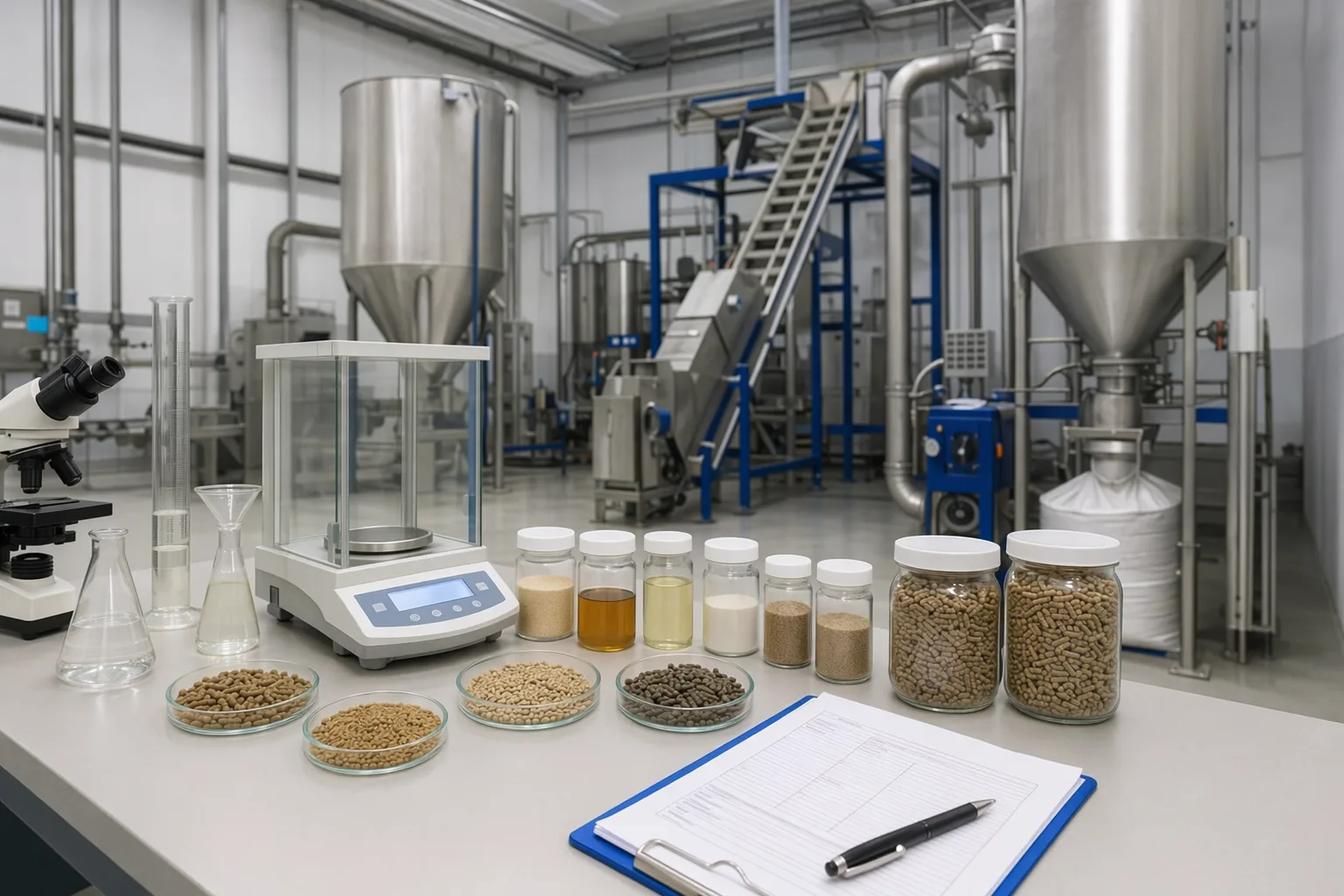
Compare phytase enzyme options with a practical procurement checklist for feed mills, premix producers, integrators, and aquaculture formulators.
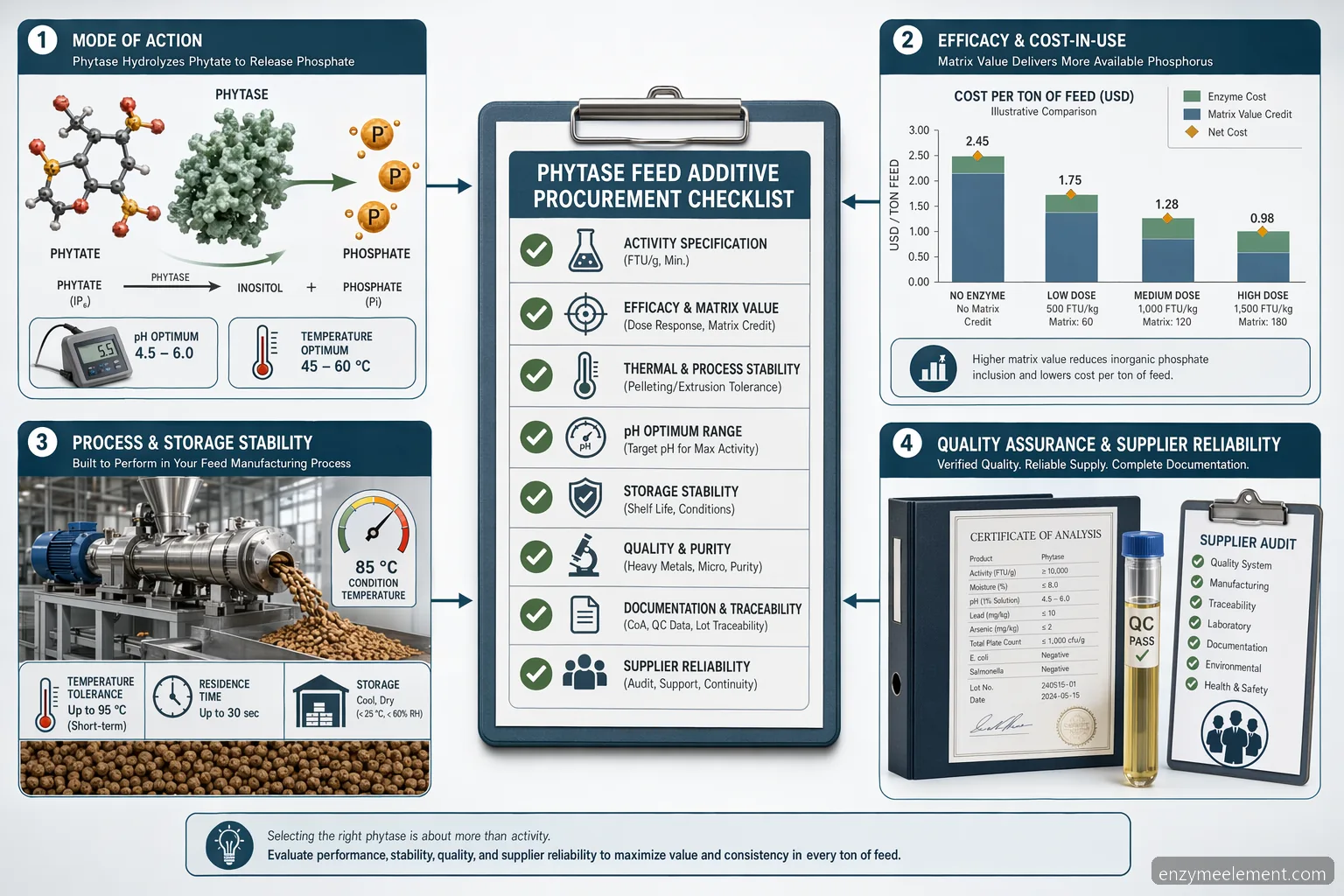
What Is Phytase in Animal Feed?
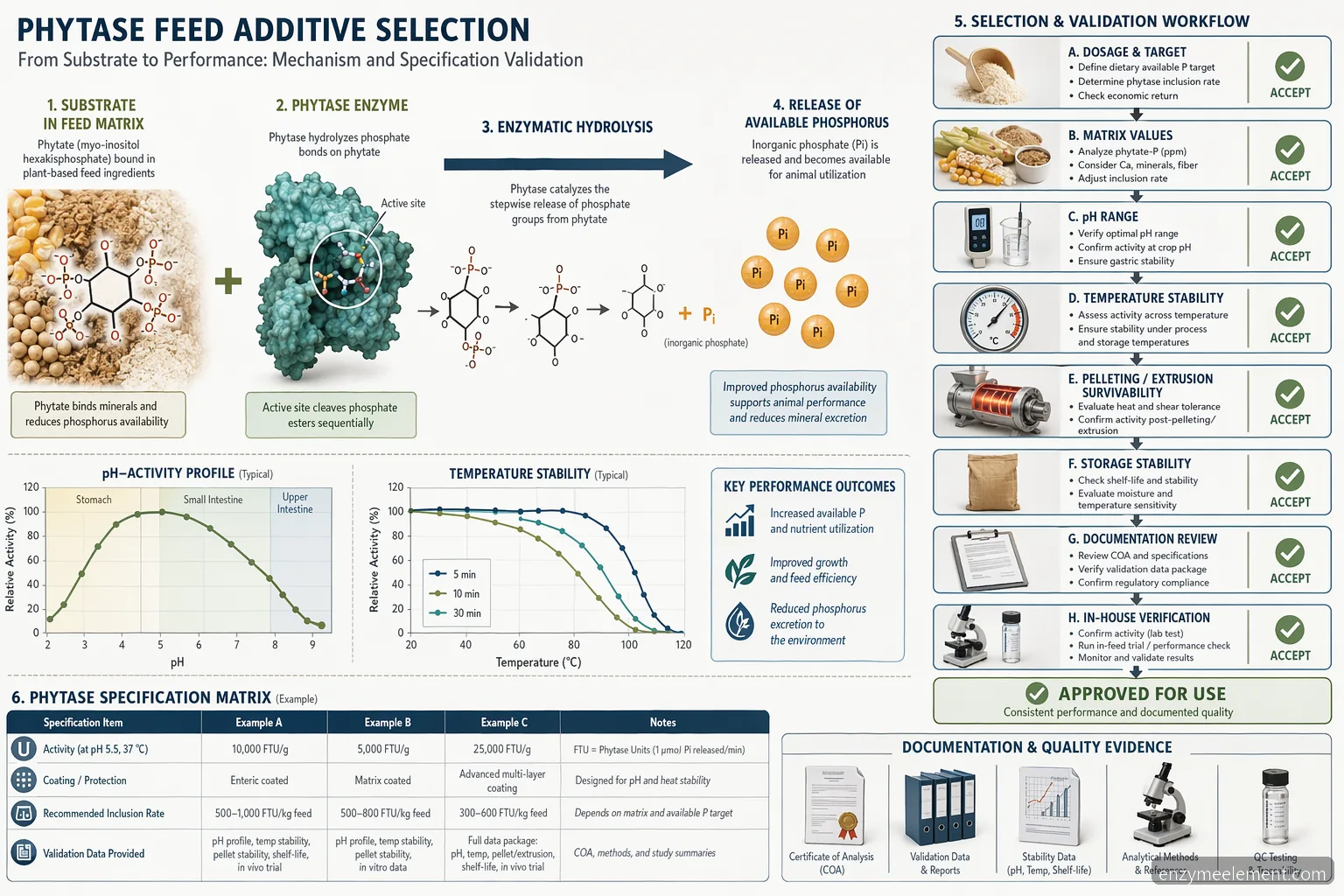
Phytase is a phosphorus release enzyme used to hydrolyze phytate, the main storage form of phosphorus in many plant-based feed ingredients. In practical animal nutrition, a phytase feed additive helps improve the availability of phosphorus already present in corn, soybean meal, wheat, rice bran, oilseed meals, and other feedstuffs. This can reduce reliance on inorganic phosphate while supporting more precise diet formulation. When buyers search for what is phytase or phytase in animal feed, the key point is application-specific performance: enzyme activity in the animal’s digestive pH range, compatibility with feed processing, and predictable release values. This page focuses on B2B selection for animal feed, not human supplement or medical use. The phrase phytase in food can refer to other contexts, but industrial feed buyers should prioritize feed-grade documentation, formulation guidance, and batch-to-batch quality controls.
Primary role: release phytate-bound phosphorus • Common use: poultry, swine, aquaculture, and premix systems • Buyer focus: activity, stability, documentation, and cost-in-use
Key Specification Points to Compare
A phytase animal feed additive should be compared using measurable, auditable specifications rather than only quoted price per kilogram. Start with declared enzyme activity, typically expressed as FTU/g or equivalent units, and confirm the analytical method used. Review the pH activity curve because phytase enzyme in poultry feed and swine feed must perform in acidic gastrointestinal conditions, commonly around pH 2.5 to 5.5 depending on species and gut segment. Check thermal stability against your conditioning and pelleting profile, often 75 to 90°C for short residence times, and request recovery data after processing. Physical form also matters: dry coated granules, powder, or liquid phytase may suit different premix and post-pellet applications. The best comparison is not the highest activity on paper, but the combination of recoverable activity, uniform distribution, storage stability, and validated phosphorus release under your process conditions.
Confirm FTU/g and test method • Match pH profile to target species • Check pelleting or post-pellet application fit • Validate enzyme recovery after processing
Dosage, Matrix Values, and Cost-in-Use
Typical phytase inclusion rates vary by diet, species, phytate level, product activity, and nutritional objective. Many commercial programs evaluate bands such as 250 to 1,000 FTU/kg finished feed, while higher-dose strategies may be assessed where nutritionists seek additional phytate reduction. A supplier should provide recommended dosage guidance, but final matrix values must be approved by the feed formulator after pilot validation. Compare phytase animal feed options by cost-in-use: price per metric ton of finished feed, expected phosphorus release, inorganic phosphate replacement, calcium adjustment, amino acid or energy assumptions if used, and risk margins. Avoid comparing only purchase price per bag or drum. A lower-cost enzyme may become expensive if recovery after pelleting is poor, dosing is higher than expected, or the supplier cannot support reliable matrix recommendations for phytase in poultry feed, swine feed, or aquaculture diets.
Evaluate cost per metric ton of finished feed • Link dosage to validated phosphorus release • Review calcium and available phosphorus adjustments • Require nutritionist approval for final matrix use
Processing Conditions: Pelleting, Extrusion, and Storage
Feed processing can determine whether a phytase feed additive performs as expected. Dry phytase added before conditioning must tolerate moisture, friction, and heat during pelleting. Buyers should compare enzyme recovery at their actual conditioner temperature, retention time, die configuration, and cooling conditions. For example, a plant running 80 to 85°C may see different recovery than a plant running 90°C with longer retention. In aquaculture feed, extrusion can be harsher than standard pelleting, so liquid post-coating or protected formats may be considered. Storage stability should be checked in the intended premix or finished feed, especially where minerals, choline chloride, organic acids, or high humidity are present. Ask for stability data at relevant temperatures, such as 25°C ambient and accelerated conditions, but verify through your own retained-sample testing. Good specification comparison includes both initial activity and activity remaining at feed-out.
Test recovery after real plant processing • Assess premix compatibility and storage humidity • Consider liquid application for severe heat processes • Monitor retained samples through shelf life
Documentation and Supplier Qualification
Before approving a phytase animal feed supplier, request the current certificate of analysis, technical data sheet, and safety data sheet for the exact product grade being offered. The COA should state batch number, activity result, test method or reference, manufacturing date, shelf life, and key quality parameters. The TDS should define recommended application, dosage guidance, pH and temperature profile, storage conditions, packaging, and handling precautions. The SDS should support safe storage and plant handling procedures. Supplier qualification may also include allergen or GMO statements when relevant to your market, country-specific feed compliance information, change-control policy, traceability, and complaint handling process. Avoid relying on unverifiable claims or generic certificates that do not identify the product. For B2B procurement, consistent documentation and responsive technical support are as important as enzyme activity.
Request COA, TDS, and SDS before approval • Verify batch traceability and shelf-life data • Review change-control and complaint procedures • Confirm documents match the offered product grade
Pilot Validation Checklist for Feed Mills
Pilot validation turns phytase comparison data into procurement confidence. Start with a small production run using the planned inclusion point, mixing sequence, and carrier system. Sample mash, post-pellet feed, and retained feed to measure enzyme activity recovery and distribution uniformity. If your program uses a phosphorus release enzyme to reduce inorganic phosphate, evaluate formulation changes carefully with nutrition and production teams. In poultry feed, phytase enzyme performance can be influenced by diet phytate level, calcium concentration, limestone particle size, acid-binding capacity, and pelleting conditions. In aquaculture diets, water stability and leaching may also be relevant. Review feed conversion, mineral status indicators, litter or manure phosphorus targets, and economic outcomes only within a properly designed trial. A qualified supplier should help interpret activity data, troubleshoot processing losses, and refine cost-in-use assumptions before full-scale adoption.
Run mash and post-process activity testing • Check distribution uniformity across samples • Use controlled formulation changes • Review technical results before commercial rollout
Technical Buying Checklist
Buyer Questions
A phytase feed additive is used to release phosphorus bound in phytate from plant-based feed ingredients. This supports more efficient use of phosphorus already present in the diet and may reduce the need for added inorganic phosphate. For industrial feed buyers, the main comparison points are enzyme activity, pH performance, processing stability, validated matrix values, documentation, and cost-in-use.
Phytase in poultry feed is usually evaluated by declared FTU activity, recovery after pelleting, distribution uniformity, and expected phosphorus release in the target diet. Nutritionists also review calcium level, available phosphorus, ingredient phytate, and processing temperature. Pilot trials should test mash and finished feed activity, then compare formulation savings and bird performance under controlled commercial conditions.
Dosage depends on product activity, species, diet composition, phytate level, and nutritional objective. Many programs evaluate about 250 to 1,000 FTU/kg finished feed, with higher levels used in some strategies. Buyers should not copy a generic dosage without checking the supplier’s TDS, matrix recommendations, pelleting recovery, and nutritionist approval for the final feed formula.
Request a certificate of analysis, technical data sheet, and safety data sheet for the exact phytase grade under evaluation. The COA should show batch activity and QC results. The TDS should describe dosage, pH and temperature profile, storage, packaging, and application guidance. The SDS should support safe handling, storage, and plant-level risk assessment.
Compare suppliers by cost-in-use rather than price per kilogram alone. Review recoverable activity after processing, dosage needed per ton of feed, phosphorus release support, batch consistency, shelf life, documentation quality, traceability, technical service, and pilot validation assistance. A cheaper phytase can cost more if processing recovery is weak or formulation support is insufficient.
Phytase for Research & Industry
Need Phytase for your lab or production process?
ISO 9001 certified · Food-grade & research-grade · Ships to 80+ countries
Frequently Asked Questions
What is the main purpose of a phytase feed additive?
A phytase feed additive is used to release phosphorus bound in phytate from plant-based feed ingredients. This supports more efficient use of phosphorus already present in the diet and may reduce the need for added inorganic phosphate. For industrial feed buyers, the main comparison points are enzyme activity, pH performance, processing stability, validated matrix values, documentation, and cost-in-use.
How is phytase in poultry feed usually evaluated?
Phytase in poultry feed is usually evaluated by declared FTU activity, recovery after pelleting, distribution uniformity, and expected phosphorus release in the target diet. Nutritionists also review calcium level, available phosphorus, ingredient phytate, and processing temperature. Pilot trials should test mash and finished feed activity, then compare formulation savings and bird performance under controlled commercial conditions.
What dosage range is typical for phytase in animal feed?
Dosage depends on product activity, species, diet composition, phytate level, and nutritional objective. Many programs evaluate about 250 to 1,000 FTU/kg finished feed, with higher levels used in some strategies. Buyers should not copy a generic dosage without checking the supplier’s TDS, matrix recommendations, pelleting recovery, and nutritionist approval for the final feed formula.
Which documents should be requested before buying phytase?
Request a certificate of analysis, technical data sheet, and safety data sheet for the exact phytase grade under evaluation. The COA should show batch activity and QC results. The TDS should describe dosage, pH and temperature profile, storage, packaging, and application guidance. The SDS should support safe handling, storage, and plant-level risk assessment.
How should suppliers be compared beyond price?
Compare suppliers by cost-in-use rather than price per kilogram alone. Review recoverable activity after processing, dosage needed per ton of feed, phosphorus release support, batch consistency, shelf life, documentation quality, traceability, technical service, and pilot validation assistance. A cheaper phytase can cost more if processing recovery is weak or formulation support is insufficient.
Related: Phytase Feed Activity & Assay
Turn This Guide Into a Supplier Brief Request a phytase specification review, sample plan, and cost-in-use comparison for your feed application. See our application page for Phytase Feed Activity & Assay at /applications/phytase-feed-activity-assay/ for specs, MOQ, and a free 50 g sample.
Contact Us to Contribute