Best Phytase Enzyme for Poultry Feed: Dosage, pH, and Heat Stability
Troubleshoot phytase dosage, pH, heat stability, QC, and supplier qualification for poultry feed cost-in-use and phosphorus release.
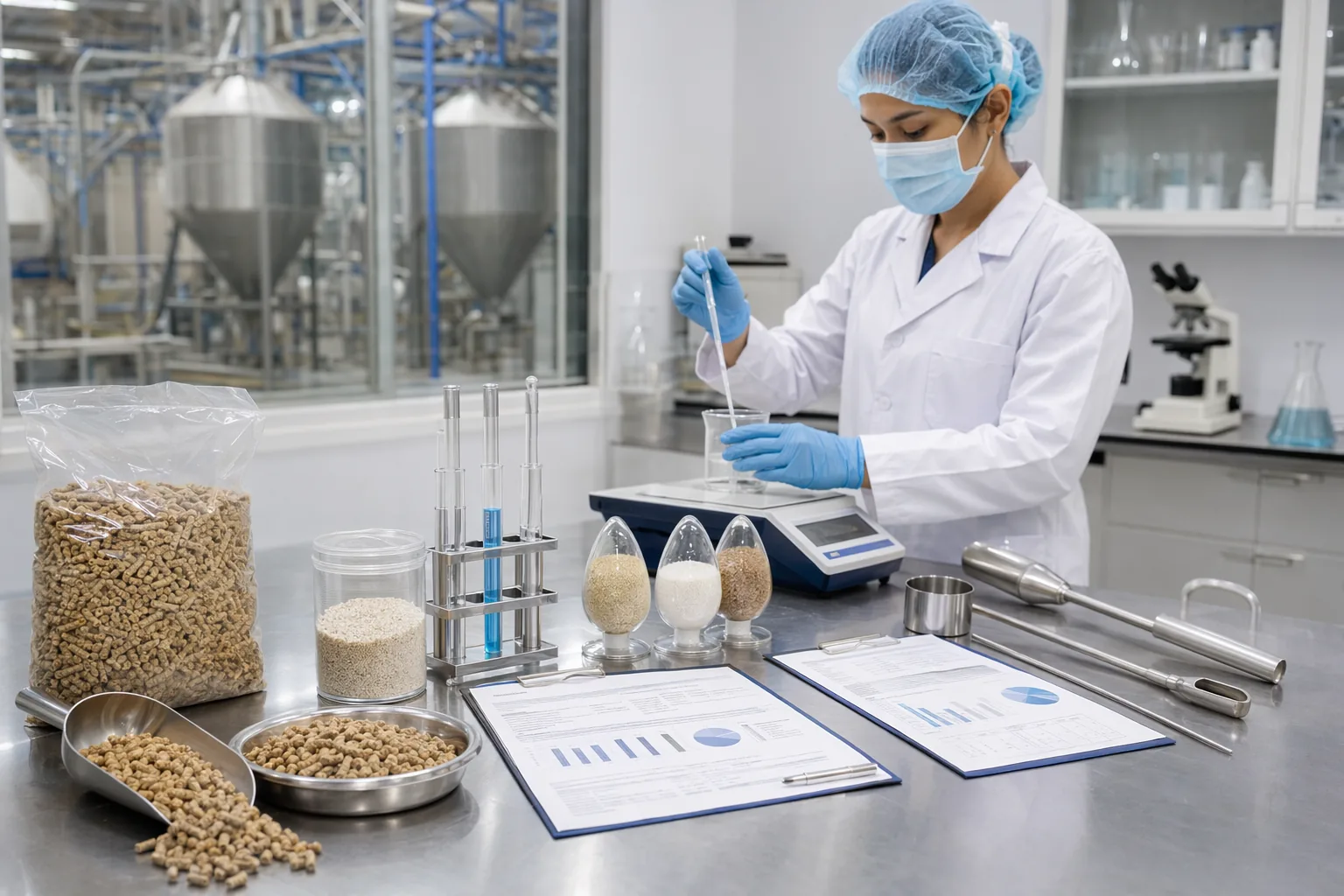
Selecting the right phytase enzyme for poultry feed is a process decision: match activity, pH profile, pelleting tolerance, documentation, and cost-in-use to your feed mill conditions.
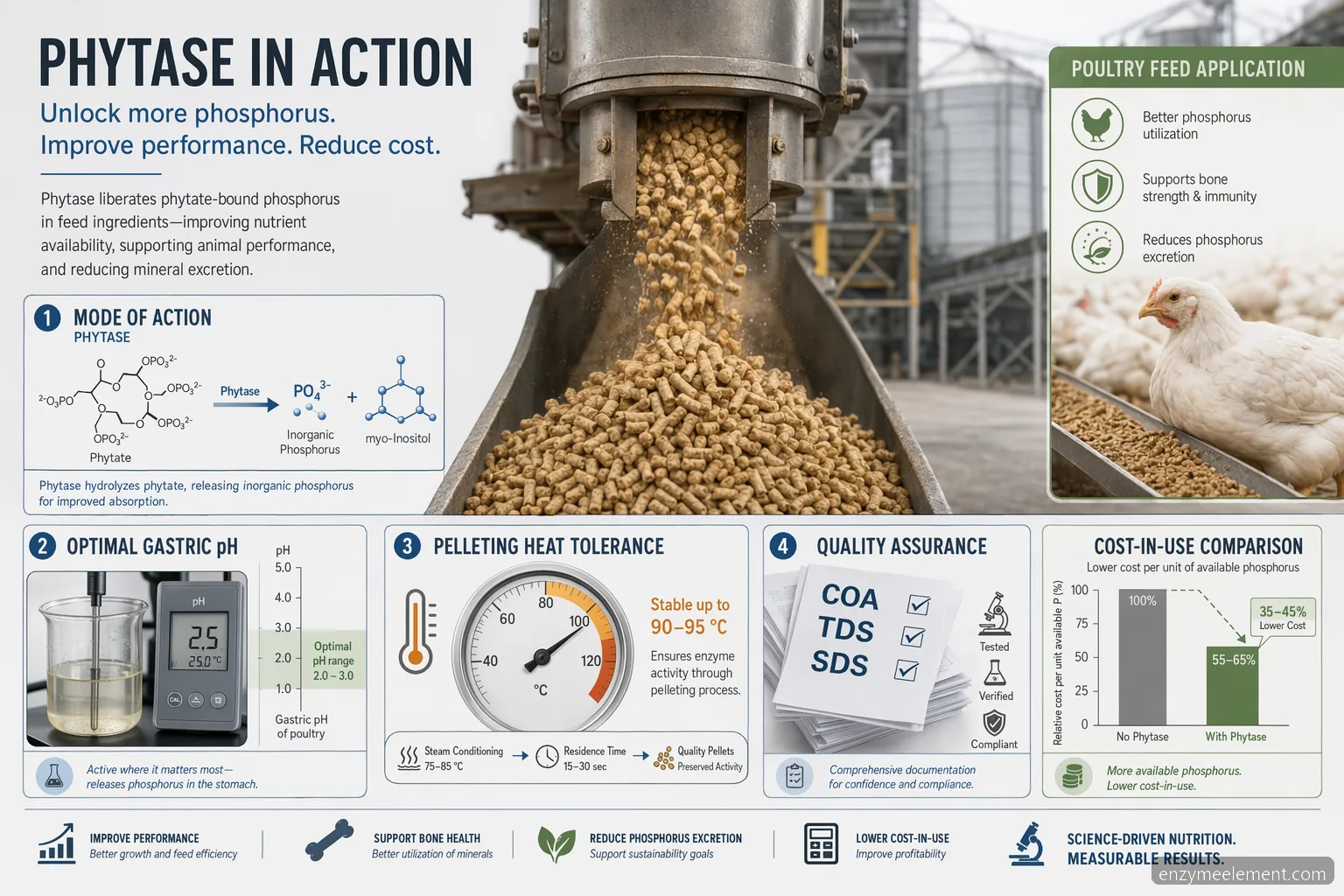
Why phytase performance varies in poultry feed
Phytase is a phosphorus release enzyme used to hydrolyze phytate-bound phosphorus in cereal- and oilseed-based poultry diets. When results are inconsistent, the issue is rarely the enzyme name alone. Performance can change with substrate level, calcium balance, feed pH environment, pelleting heat, mixing uniformity, storage humidity, and analytical recovery. For a feed mill, the best phytase enzyme for poultry feed is the product that delivers predictable retained activity and nutrient release under the mill’s real process conditions. Buyers should compare phytase enzyme in poultry feed by declared activity unit, recommended matrix values, thermostability option, and evidence from feed-relevant trials. If phytase in poultry feed is underdosed, overheated, poorly mixed, or stored incorrectly, expected phosphorus release may not be achieved even when the raw material COA appears acceptable.
Check diet phytate level before setting the release target. • Review calcium and available phosphorus assumptions in the formulation matrix. • Confirm enzyme distribution with mixer and finished-feed sampling. • Measure retained activity after conditioning and pelleting.
Practical dosage bands and formulation approach
Commercial phytase poultry feed programs commonly start in the range of 250-1,000 FTU/kg complete feed for standard phosphorus replacement, with higher-dose programs sometimes evaluated around 1,000-2,000 FTU/kg where nutritionists target broader phytate reduction. These are planning bands, not universal recommendations. Final dosage should be based on bird type, diet composition, target available phosphorus release, safety margin, and the supplier’s validated matrix. A phytase enzyme supplier for animal feed should provide dosage guidance in the TDS, including activity unit definition and recommended inclusion method. In premix or liquid application, calculate dilution carefully so micro-ingredient scales remain accurate. For troubleshooting, run a side-by-side trial at the current dose and one or two adjusted levels, then compare analyzed retained activity, feed conversion indicators, litter mineral output, and cost per ton of complete feed.
Define whether the goal is phosphorus replacement, phytate reduction, or both. • Avoid changing phytase dose without updating the feed formulation matrix. • Use pilot batches before plant-wide implementation.
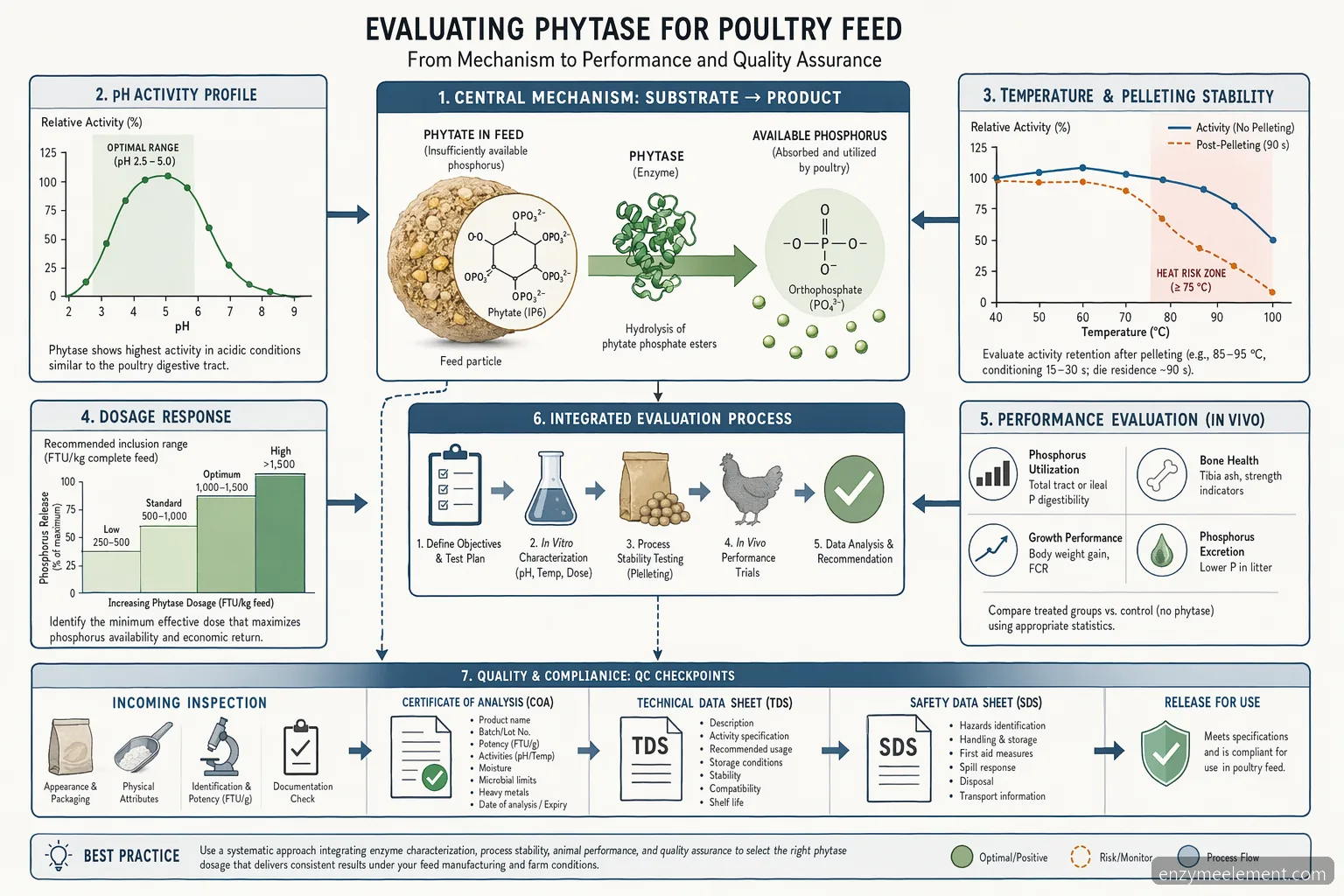
pH profile, temperature, and pelleting risks
A phytase enzyme for poultry must remain active through feed processing and then function in the bird’s digestive pH range. Many commercial phytases show useful activity in acidic conditions, often around pH 2.5-5.5 depending on the enzyme source and coating technology. During feed manufacture, the larger risk is heat and moisture exposure. Conditioning and pelleting may expose feed to 75-90°C or higher for short periods; unprotected enzymes can lose activity if the residence time, steam quality, or die friction is severe. Thermostable granules, coated products, or post-pellet liquid application may be appropriate depending on the mill. A troubleshooting program should record conditioner temperature, mash moisture, retention time, die temperature, and finished pellet temperature. Compare phytase recovery in mash versus pellets to determine whether losses are caused by formulation, processing, or storage.
Validate retained FTU/kg after pelleting, not only in mash. • Review pH activity curves in the technical data sheet. • Monitor conditioner temperature and retention time during every trial. • Evaluate coated or post-pellet application for high-heat lines.
QC checks: COA, TDS, SDS, and incoming inspection
Industrial buyers should treat phytase enzyme procurement as a controlled raw-material program. Each batch should arrive with a COA showing product name, lot number, declared activity, test method reference, manufacture or retest date, and storage guidance. The TDS should explain physical form, carrier, solubility or dispersibility, recommended dosage, pH range, temperature considerations, and application method. The SDS should support safe handling, dust control, spill response, and warehouse procedures. Incoming QC can include appearance, odor, packaging integrity, lot traceability, and periodic third-party or in-house activity testing. For finished feed, sample collection is often the largest source of error, so take multiple incremental samples and composite them properly. If activity recovery is low, investigate sampling, assay method compatibility, heat exposure, premix dilution, and storage before assuming supplier failure.
Require COA, TDS, and SDS before first purchase. • Keep retained samples from incoming lots and pilot batches. • Align enzyme assay method with the supplier’s declared activity unit. • Document storage temperature, humidity, and first-in, first-out use.
Supplier qualification and cost-in-use comparison
The lowest price per kilogram is not always the lowest cost-in-use. Compare phytase enzyme by delivered cost per million FTU, recommended dosage, retained activity after processing, matrix value confidence, packaging loss, shelf life, and technical support. A qualified supplier should provide consistent batch documentation, realistic lead times, change-control communication, and support for pilot validation. Ask for application data relevant to poultry feed, not only generic enzyme information or unrelated claims about phytase in food. If a product is intended for animal feed, ensure the documentation, labeling, and regulatory pathway match that use; do not assume suitability for direct human food applications without the required food-grade documentation. For purchasing teams, the most reliable qualification process is a controlled plant trial: same diet, same pelleting line, defined sampling plan, retained activity analysis, animal performance review where applicable, and a documented cost-in-use model.
Compare cost per delivered and retained FTU, not only price per kg. • Ask suppliers to support pilot design and troubleshooting. • Confirm labeling and documentation match animal feed use. • Review batch consistency across multiple shipments.
Technical Buying Checklist
Buyer Questions
The best phytase enzyme for poultry feed is the one that delivers the required phosphorus release under your actual diet and processing conditions. Compare pH activity, declared FTU, heat stability, dosage guidance, matrix values, COA consistency, and retained activity after pelleting. A controlled pilot trial is more reliable than choosing only by enzyme source, brochure claims, or price per kilogram.
Many poultry feed programs evaluate phytase at about 250-1,000 FTU/kg complete feed for standard phosphorus replacement, while higher-dose strategies may be tested around 1,000-2,000 FTU/kg. The correct dose depends on phytate level, calcium and phosphorus formulation, species and age, enzyme activity, and supplier matrix data. Always validate dosage through formulation review and pilot production.
Activity loss after pelleting is usually linked to heat, moisture, steam quality, conditioner retention time, die friction, or extended hot pellet exposure. Sampling and assay differences can also make recovery look low. Test both mash and finished pellets, record conditioning temperature and moisture, and compare coated, thermostable, or post-pellet liquid phytase options if the line runs at high temperatures.
A phytase enzyme supplier for animal feed should provide a COA for each lot, plus a TDS and SDS before purchase. The COA should list declared activity, batch number, method reference, and date information. The TDS should cover dosage, pH, temperature, storage, and application guidance. The SDS should support safe handling, dust control, and warehouse procedures.
Not necessarily. Phytase in poultry feed is supplied and documented for animal feed manufacturing, with specifications, labeling, and use instructions matched to that application. Phytase in food or direct human food processing may require different grade requirements, documentation, and regulatory review. Buyers should not transfer an animal feed enzyme into food use without confirming suitability and required compliance documents.
Phytase for Research & Industry
Need Phytase for your lab or production process?
ISO 9001 certified · Food-grade & research-grade · Ships to 80+ countries
Frequently Asked Questions
What is the best phytase enzyme for poultry feed?
The best phytase enzyme for poultry feed is the one that delivers the required phosphorus release under your actual diet and processing conditions. Compare pH activity, declared FTU, heat stability, dosage guidance, matrix values, COA consistency, and retained activity after pelleting. A controlled pilot trial is more reliable than choosing only by enzyme source, brochure claims, or price per kilogram.
How much phytase should be added to poultry feed?
Many poultry feed programs evaluate phytase at about 250-1,000 FTU/kg complete feed for standard phosphorus replacement, while higher-dose strategies may be tested around 1,000-2,000 FTU/kg. The correct dose depends on phytate level, calcium and phosphorus formulation, species and age, enzyme activity, and supplier matrix data. Always validate dosage through formulation review and pilot production.
Why does phytase activity drop after pelleting?
Activity loss after pelleting is usually linked to heat, moisture, steam quality, conditioner retention time, die friction, or extended hot pellet exposure. Sampling and assay differences can also make recovery look low. Test both mash and finished pellets, record conditioning temperature and moisture, and compare coated, thermostable, or post-pellet liquid phytase options if the line runs at high temperatures.
What documents should a phytase enzyme supplier provide?
A phytase enzyme supplier for animal feed should provide a COA for each lot, plus a TDS and SDS before purchase. The COA should list declared activity, batch number, method reference, and date information. The TDS should cover dosage, pH, temperature, storage, and application guidance. The SDS should support safe handling, dust control, and warehouse procedures.
Is phytase in food the same as phytase in poultry feed?
Not necessarily. Phytase in poultry feed is supplied and documented for animal feed manufacturing, with specifications, labeling, and use instructions matched to that application. Phytase in food or direct human food processing may require different grade requirements, documentation, and regulatory review. Buyers should not transfer an animal feed enzyme into food use without confirming suitability and required compliance documents.
Related: Phytase Feed Activity & Assay
Turn This Guide Into a Supplier Brief Send your feed formula, pelleting conditions, and target FTU/kg to Enzyme Element for phytase selection, pilot validation, and cost-in-use review. See our application page for Phytase Feed Activity & Assay at /applications/phytase-feed-activity-assay/ for specs, MOQ, and a free 50 g sample.
Contact Us to Contribute